
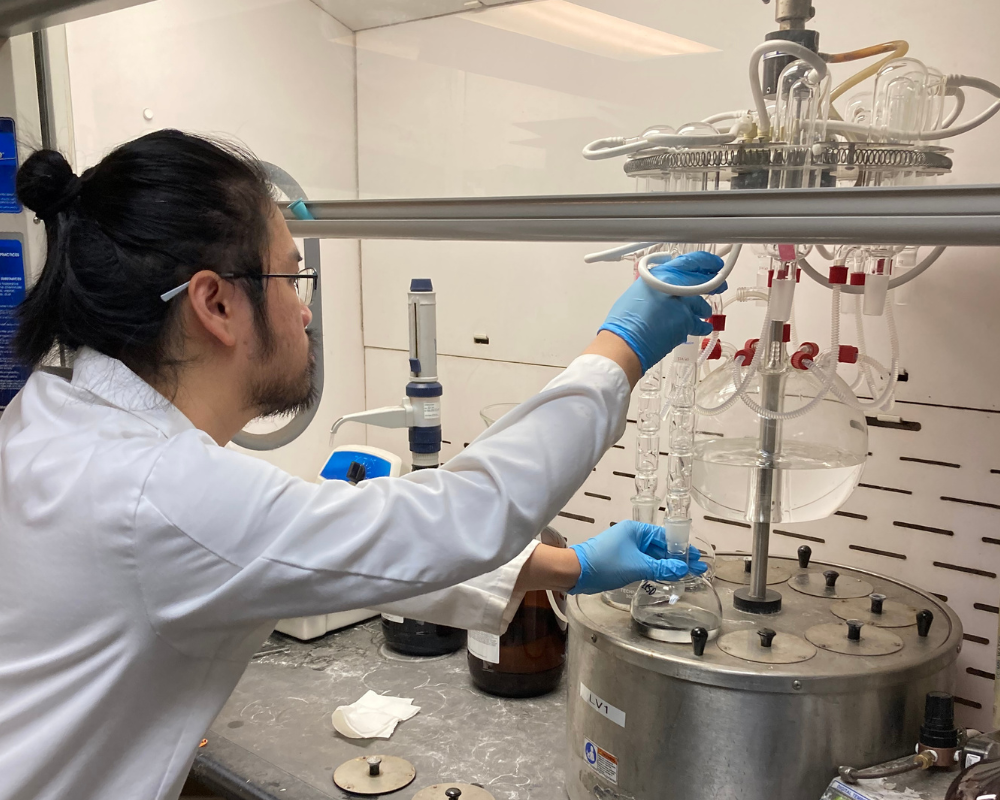
Rotary evaporation has long been a staple in laboratories for removing solvents from samples efficiently. However, as technology advances and the demand for higher throughput and more efficient processes increases, alternative methods are becoming more attractive. One such alternative is Organomation's S-EVAP evaporators. For laboratories interested in processing several samples simultaneously, the S-EVAP offers significant advantages over multiple rotary evaporators.
Understanding Rotary Evaporation
Rotary evaporation is a technique widely used in chemical and biochemical labs to remove solvents from samples by applying heat and reducing pressure to induce evaporation. The process involves a rotating flask, which increases the surface area for evaporation, making it efficient for solvent removal. Despite its effectiveness, rotary evaporation has limitations, especially when dealing with high-throughput requirements or multiple samples simultaneously.
Criteria for Choosing an Alternative
When selecting an alternative to rotary evaporation, several factors need to be considered:
- Efficiency: How quickly and effectively can the alternative remove solvents?
- Cost-effectiveness: What is the initial investment and operating cost?
- Ease of use: How user-friendly is the equipment?
- Applicability: Can the alternative handle a variety of solvents and sample types?
- Scalability: Is the method suitable for processing multiple samples simultaneously?
Alternatives to Rotary Evaporation
1. Organomation's S-EVAP Evaporators
Organomation's S-EVAP evaporators, available in Kuderna-Danish (KD) and round-bottom (RB) flask models, are designed for laboratories requiring high throughput and efficient solvent removal. The S-EVAP KD is available in 8 or 10 position models and can handle sample sizes up to 500 mL, while the S-EVAP RB models also offer 8 or 10 positions with capacities up to 250 mL per sample.
The S-EVAP system is tailored for general evaporation and concentration of analytical or environmental samples using various glassware configurations to meet specific method requirements under controlled and reproducible conditions. This system features rapid solvent evaporation with solvent vapor recovery, achieving solvent recoveries exceeding 96% by volume under ideal conditions. It can operate with cold tap water or a recirculating chiller system, ensuring efficient cooling. The digital controlled water bath provides even and uniform heating without scorching the final samples. The parallel water manifold system ensures even cooling water distribution to each condenser, while the rotary water manifold allows unlimited instrument rotation for easy front loading without condenser tubing entanglement.
Advantages of S-EVAP Over Rotary Evaporation:
Higher Throughput: The S-EVAP can process multiple samples simultaneously, significantly increasing throughput compared to using several rotary evaporators.
Cost-Effectiveness: Although the initial investment may be higher than a single rotary evaporator, the S-EVAP's ability to handle multiple samples at once reduces the need for additional equipment. Lower maintenance costs and reduced need for additional space and infrastructure.
Ease of Use: User-friendly design with straightforward controls and easy maintenance. Reduced handling time compared to managing multiple rotary evaporators, allowing technicians to focus on other tasks.
Consistency and Precision: Uniform evaporation conditions ensure consistent results across all samples. Precise control over temperature allows for tailored evaporation conditions for different sample types.
Space Efficiency: A single S-EVAP unit occupies less space compared to multiple rotary evaporators, making it ideal for labs with limited bench space.
Integration in EPA Method 1699
Rotary Evaporator Usage:
- Initial Solvent Reduction: Rotary evaporators are used first to remove bulk solvent from the sample extract. This step efficiently reduces the volume of the extract to a manageable level under reduced pressure, ensuring that the majority of the solvent is removed without significant loss of analytes.
- Controlled Conditions: The rotary evaporator's ability to control temperature and vacuum precisely helps in handling large initial volumes and reducing them quickly.
S-EVAP Evaporator Usage:
- Further Concentration: After the rotary evaporation step, the concentrated extract is transferred to the S-EVAP system. The S-EVAP evaporators, including the S-EVAP-KD and S-EVAP-RB models, are designed to handle smaller volumes and provide a final concentration of the sample.
- Solvent Recovery: The S-EVAP systems offer efficient solvent recovery, with the S-EVAP-RB capable of achieving solvent recoveries exceeding 96% by volume under ideal conditions. This high recovery rate is crucial for environmental and analytical labs that aim to minimize solvent waste and ensure consistent results.
- Even Heating and Cooling: The S-EVAP-RB features a digital controlled water bath for uniform heating, preventing scalding of the final samples. Additionally, the parallel water manifold system ensures even cooling to each condenser, enhancing the efficiency and reproducibility of the evaporation process.
Benefits of Tandem Use
- Enhanced Efficiency: Using both systems in tandem allows for the initial large volume reduction by the rotary evaporator, followed by precise final concentration using the S-EVAP. This combination maximizes throughput and ensures high-quality results.
- Cost and Space Efficiency: The rotary evaporator handles the bulk of the solvent reduction, reducing the strain on the S-EVAP system. This distribution of workload helps in maintaining the equipment and optimizing laboratory space.
- Method Compliance: Following this tandem approach ensures compliance with EPA Method 1699, which outlines specific procedures for pesticide analysis in various environmental samples.
Organomation's S-EVAP evaporators, when used in conjunction with rotary evaporators, provide an efficient and reliable solution for laboratories performing high-throughput solvent evaporation tasks, such as those required by EPA Method 1699. This tandem use ensures precise control over the evaporation process, high solvent recovery rates, and consistent sample preparation, making it an ideal approach for environmental and analytical laboratories.
2. Buchi's Syncore Evaporators
Buchi's Syncore evaporators are advanced evaporation systems designed to provide high throughput and efficiency. They use parallel evaporation technology, allowing simultaneous processing of multiple samples under controlled conditions.
- Applications: Drug discovery, natural product extraction and chemical synthesis
- Advantages: High efficiency with parallel evaporation capabilities, advanced safety features and precise control over evaporation parameters
- Limitations: Potential cost considerations and specific application limitations
Download our S-EVAP-RB vs Buchi Syncore comparison with pricing!
3. Freeze Drying (Lyophilization)
Freeze drying, also known as lyophilization, is a dehydration process used to preserve perishable materials or make them more convenient for transport. The process involves three main stages: freezing, primary drying (sublimation), and secondary drying (desorption).
- Applications: Pharmaceuticals, food industry, biological samples.
- Advantages: Long-term stability of dried products.
- Limitations: High cost and time-consuming process.
For a more in-depth review, please visit our piece on Types of Laboratory Evaporators.
4. Centrifugal Evaporation
Centrifugal evaporation is a technique used to remove solvents from samples by combining centrifugal force, vacuum, and heat. This method is particularly effective for drying samples rapidly and efficiently, making it ideal for high-throughput laboratories.
Applications: Used for concentrating and drying biological samples, drug formulations, and other compounds that require gentle handling. Ideal for processing DNA, RNA, proteins, and other sensitive biomolecules.
Advantages: The combination of centrifugal force and vacuum significantly speeds up the evaporation process compared to traditional methods. Multiple samples can be processed simultaneously, making it suitable for high-volume laboratories.
Limitations:
- Equipment Cost: High-quality centrifugal evaporators can be expensive to purchase and maintain.
- Limited Sample Types: Not all sample types are suitable for centrifugal evaporation, particularly those that require very specific temperature or pressure conditions.
- Technical Expertise: Requires trained personnel to operate the equipment and optimize conditions for different sample types.
5. Vacuum Distillation
Vacuum distillation is a technique used to separate mixtures of liquids by utilizing reduced pressure, which lowers the boiling points of the components. This method is particularly useful for separating heat-sensitive compounds that might decompose at higher temperatures.
Applications: Used to purify reaction products and separate mixtures in organic synthesis. Essential for refining crude oil into various fractions, such as gasoline, diesel, and lubricants.
Advantages: Achieves high levels of purity by effectively separating components based on their boiling points. Reduces the risk of thermal decomposition by operating at lower temperatures. Applicable to a wide range of substances, including complex mixtures and heat-sensitive materials.
Limitations:
- Complex Setup: Requires specialized equipment and careful control of vacuum and temperature conditions.
- High Cost: Initial investment and maintenance costs can be high.
- Technical Skill: Operators need to be skilled in managing the distillation process to achieve optimal results.
6. Spray Drying
Spray drying is a process used to convert liquid materials into dry powders by rapidly drying them with a hot gas. This technique is widely used in the food, pharmaceutical, and chemical industries for creating stable, shelf-stable powders.
Applications: Used to produce powdered milk, coffee, eggs, and flavors. Employed in the production of powdered drugs and formulations.
Advantages: Efficiently converts liquids into dry powders in a short time. Allows precise control over the size and distribution of the powder particles.
Limitations:
- High Energy Consumption: Requires significant energy to heat the drying gas.
- Thermal Degradation: High temperatures can cause thermal degradation of sensitive compounds.
- Complexity: Requires careful control of operating conditions to achieve desired product characteristics.
7. Simple Distillation
Simple distillation is a basic method used to separate liquids with significantly different boiling points. It involves heating the mixture to vaporize the more volatile component, which is then condensed and collected.
Applications: Used to purify solvents, water, and other liquids by removing impurities. Ideal for separating simple mixtures of two components with different boiling points.
Advantages: Easy to set up and operate with minimal equipment. Low initial investment and operating costs. Effective for separating mixtures with large differences in boiling points.
Limitations:
- Limited Precision: Not suitable for separating complex mixtures or components with close boiling points.
- Scalability Issues: Less efficient for large-scale industrial processes.
- Thermal Degradation: Higher temperatures can cause degradation of heat-sensitive components.
8. Microwave-Assisted Evaporation
Microwave-assisted evaporation is a technique that uses microwave energy to heat and evaporate solvents from samples. This method is efficient and rapid, making it suitable for various laboratory applications.
- Applications: Used to speed up reactions and solvent removal in organic synthesis. Employed for drying drug formulations and preparing samples for analysis.
- Advantages: Microwaves heat samples quickly and uniformly, reducing evaporation time.
Limitations:
- Equipment Cost: Microwave evaporators can be expensive to purchase and maintain.
- Sample Compatibility: Not all samples are suitable for microwave heating, particularly those with low dielectric properties.
- Safety Concerns: Requires careful handling to avoid overheating and potential hazards.
For laboratories that need to process several samples simultaneously, Organomation's S-EVAP evaporators present a compelling alternative to rotary evaporation. By offering higher throughput, cost-effectiveness, ease of use, and space efficiency, the S-EVAP can streamline laboratory workflows and improve overall productivity. As technology continues to evolve, staying informed about the latest advancements in evaporation methods will ensure that labs can maintain optimal performance and efficiency.