
.jpeg)
Every laboratory has its own way of solving challenges, and nowhere is that more evident than in sample preparation. Over the past several weeks, scientists from around the world shared photos of their homemade nitrogen evaporation systems as part of our 2026 Homemade Evaporator Contest, giving us an inside look at the creative solutions they've built to keep their research moving.
This year's submissions came from universities, research institutes, contract laboratories, and industry alike, demonstrating that scientists everywhere are finding innovative ways to overcome budget constraints and workflow challenges. From repurposed aquarium parts to custom 3D-printed components, we were amazed by the ingenuity behind each submission. While selecting a winner wasn't easy, one entry stood out for its thoughtful design, practicality, and craftsmanship.
"One of my favorite parts of this contest was seeing just how creative laboratories can be when faced with limited resources," said Sarah Johnson, Marketing Specialist at Organomation. "Every submission took a different approach to the same challenge, and I was genuinely impressed by the ingenuity behind each setup. It's amazing what scientists are able to create with a little creativity, determination, and the materials they already have on hand."
🏆 Winner: David Scott – Sanford Burnham Prebys Institute
Congratulations to David Scott of Sanford Burnham Prebys Institute for taking home the grand prize—a free 24-position MICROVAP Nitrogen Evaporator!
David's homemade evaporator impressed our team with its clever use of Y-splitters, tubing, and stopcocks to create a custom gas manifold that allows nitrogen flow to be turned on or off for each individual sample. The design demonstrated both creativity and functionality, giving users precise control over nitrogen flow while making efficient use of readily available materials.
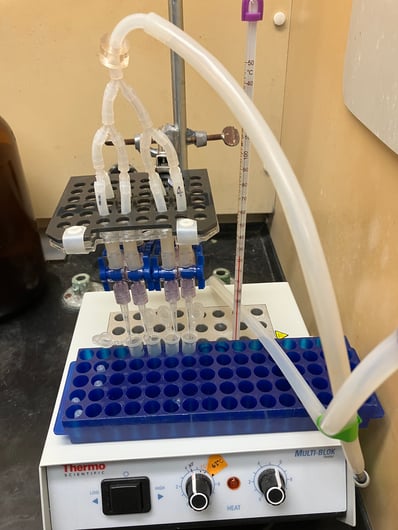
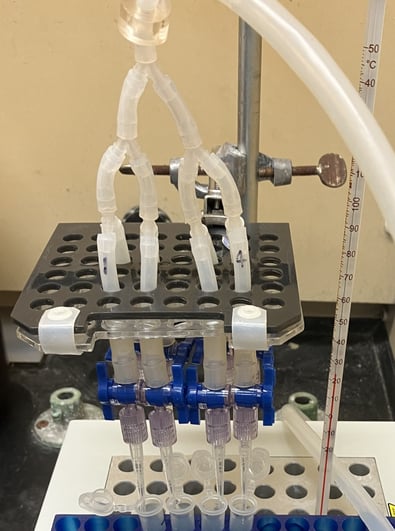
Beyond the impressive engineering, David's submission also highlighted why so many laboratories continue to build their own equipment despite the challenges. As he explained:
"As a core facility that is directly and indirectly dependent on grant funding, we are under financial pressure and having to be careful about expenditures. Getting a new efficient nitrogen evaporator will be a major boost for us."
We're thrilled to help support David and the team at Sanford Burnham Prebys Institute with a commercial evaporation system that will save time, improve consistency, and allow them to spend less time managing sample preparation and more time focusing on their research.
A Look at the Creativity Across Our Entries
No two submissions were alike. Every homemade evaporator reflected the unique challenges, budget constraints, and creativity of the lab that built it. From custom manifolds and aquarium hardware to 3D-printed components and repurposed laboratory consumables, each setup demonstrated an innovative solution to the same problem: efficiently evaporating samples with the resources available.
While only one grand prize could be awarded, several other entries earned honorable mentions for their outstanding ingenuity and thoughtful engineering.
Honorable Mentions
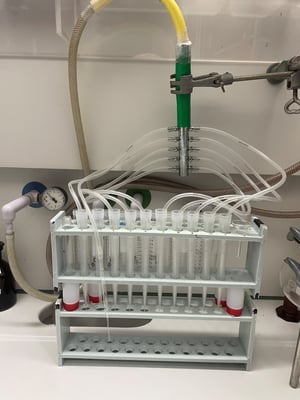
Moritz Maxeiner – Institute for Chemistry and Biology of the Marine Environment
Moritz's evaporator stood out for its clever use of affordable aquarium components to create a functional nitrogen evaporation system. It's a fantastic example of how readily available materials can be repurposed into an effective laboratory solution.
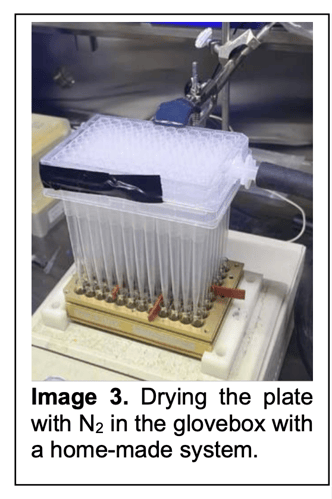
Ben Ahern – University of Wisconsin–Madison
Ben demonstrated remarkable ingenuity by building a gas manifold for plate evaporation using multiple 96-well plates and pipettes. It was one of the most unique submissions we received and showcased an impressive level of DIY engineering.
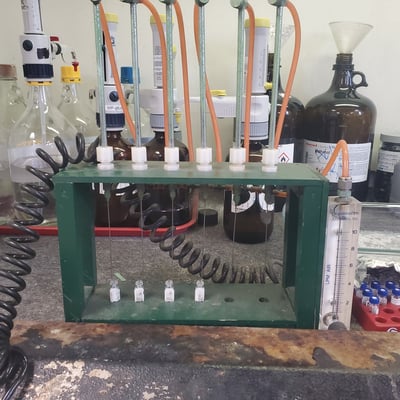
Eduardo Morales – Weck Laboratories
Eduardo's setup impressed us not only because of its thoughtful design, but because of how dependable it has proven to be over the years. It's a great example of a homemade system that has reliably supported laboratory work for a long time.
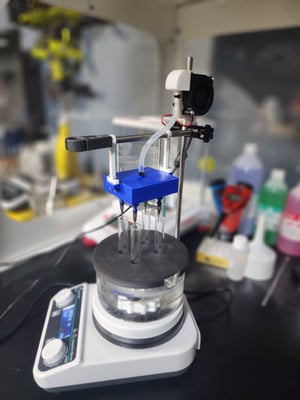
Daniel Levenson – Transition Element Ltd.
Daniel incorporated custom 3D-printed components into his evaporator, demonstrating how modern fabrication tools can be used to create highly customized laboratory equipment tailored to a lab's specific needs.
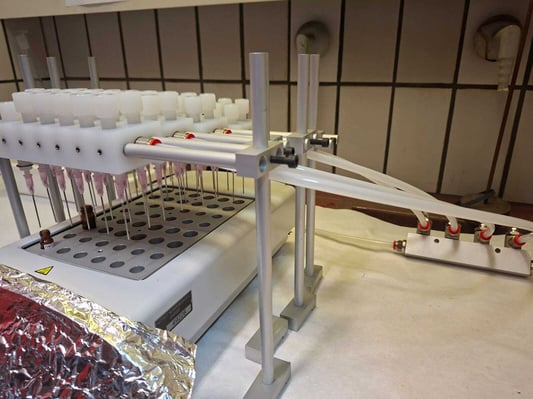
Robert Horn – Ruđer Bošković Institute
Robert's submission featured an impressive custom-built manifold capable of drying a large number of samples simultaneously. The scale of the system and the thoughtful design made it one of the most noteworthy entries in this year's contest.
Thank You to Everyone Who Entered
We'd like to sincerely thank everyone who submitted their homemade evaporator this year. Seeing the creativity, problem-solving, and engineering skills across the scientific community was both inspiring and humbling.
Many of these systems were built out of necessity—to maximize limited budgets, adapt to unique workflows, or simply keep important research moving. They are a reminder that innovation doesn't always come from expensive equipment; often, it comes from the people using it.
At the same time, these submissions reinforce why we're passionate about designing commercial evaporation systems. Scientists shouldn't have to spend valuable time building and maintaining homemade equipment just to accomplish routine sample preparation. Our goal is to provide reliable, efficient solutions that allow researchers to spend less time worrying about their equipment and more time making discoveries.
Congratulations once again to David Scott, our honorable mentions, and everyone who participated in this year's contest. Thank you for sharing your creativity with us—we look forward to seeing what innovative homemade evaporators our community comes up with next!