
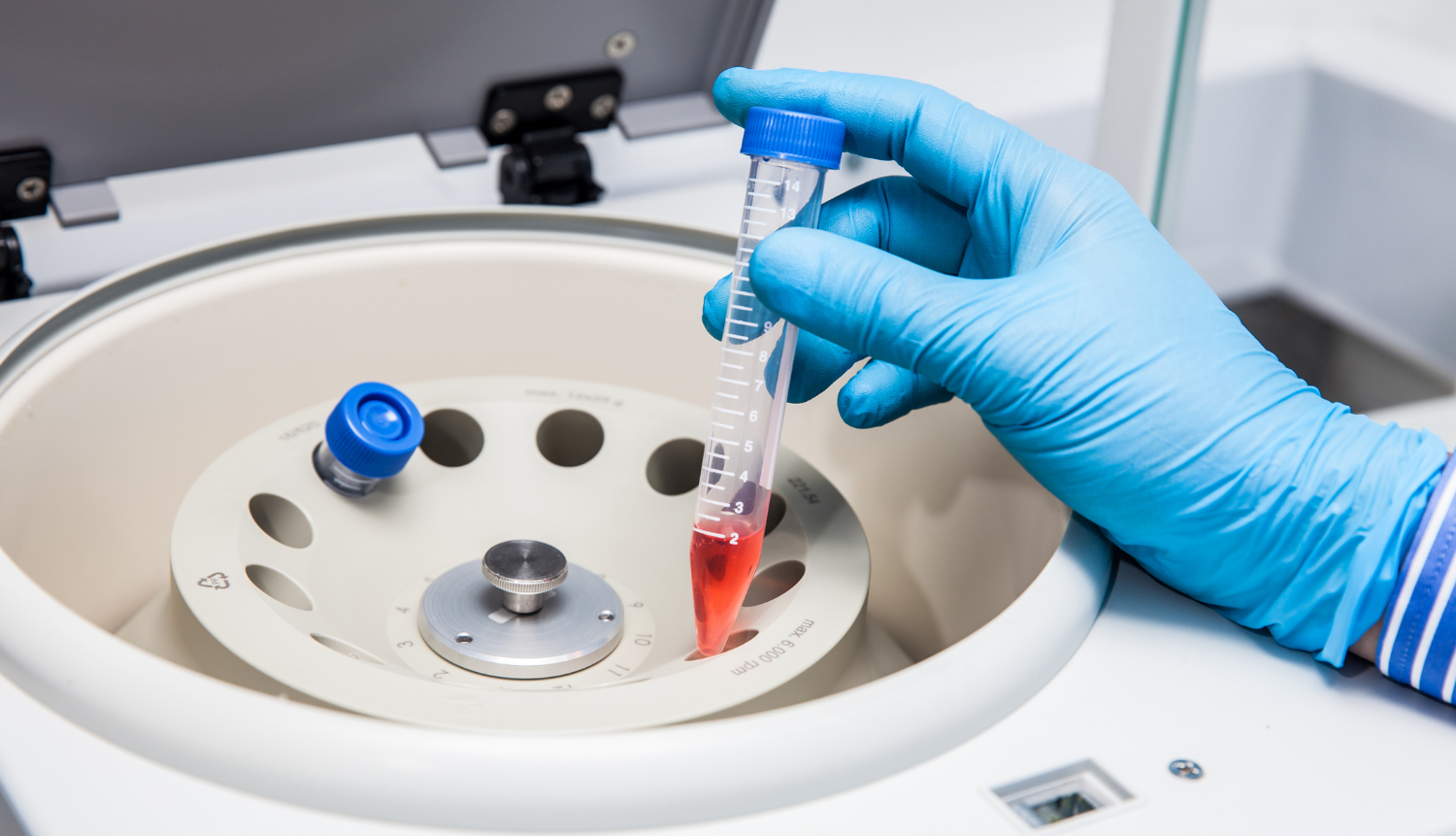
A centrifugal evaporator—also called a vacuum concentrator or centrifugal vacuum concentrator—removes solvent from multiple samples by combining reduced pressure, controlled heat, and centrifugal force. The vacuum lowers the solvent’s boiling point, controlled heat supplies energy for evaporation, and rotation keeps liquid in the vessels to limit bumping, foaming, sample loss, and cross-contamination.
That combination makes centrifugal evaporation especially useful when a laboratory must concentrate or dry many small, heat-sensitive samples, including DNA, RNA, oligonucleotides, peptides, proteins, HPLC fractions, and other biological or analytical samples.
I recently discussed the technology with Kelly Kraft Williams, Director of Laboratory Products at Labconco. Our conversation covered how centrifugal evaporators work, why evaporative cooling matters, how to choose among standard, refrigerated, acid-resistant, and DNA configurations, and where vacuum concentration belongs alongside nitrogen blowdown and rotary evaporation.
What Is a Centrifugal Evaporator?
A centrifugal evaporator is a laboratory sample concentrator designed to remove solvent from tubes, vials, flasks, or microplates under vacuum while the samples rotate. It is not a conventional centrifuge: its main purpose is not density-based separation. Instead, rotation holds the sample in the vessel during evaporation, while vacuum and controlled heat drive solvent removal.
In practical terms, the workflow is straightforward:
1. Samples are loaded into a compatible, balanced rotor.
2. The rotor begins spinning before or as vacuum is applied.
3. Reduced chamber pressure lowers the solvent’s boiling point.
4. Controlled heat replaces energy lost through evaporation and can shorten the run.
5. Solvent vapor travels to a cold trap or other collection system before it reaches the vacuum pump.
6. The nonvolatile analyte remains as a smaller-volume concentrate, film, pellet, or dry residue.
Labconco’s CentriVap systems use this same combination of centrifugal force, vacuum, and heat. Standard CentriVap models can process up to 148 samples, while CentriVap Pro configurations can accommodate up to 312 samples with compatible stacked rotors.
Why Use Vacuum?
Lowering pressure lowers the temperature at which a liquid boils. That allows a vacuum concentrator to remove water and solvent mixtures at lower temperatures than would be required at atmospheric pressure—an important advantage for thermally sensitive analytes.
Vacuum alone, however, does not make evaporation energetically free. Vaporization consumes heat and cools the remaining liquid. If the system does not replace enough energy, an aqueous sample can become very cold or even freeze, causing evaporation to slow dramatically.
This is one of the most important lessons from my conversation with Kelly: heat is not automatically the enemy. Properly controlled heat can speed a centrifugal evaporation run while active evaporation keeps the sample below the chamber setpoint. As the solvent approaches dryness and evaporative cooling decreases, the method should reduce heat or end the run before the dry residue warms unnecessarily.
Why Centrifugal Force Matters
Applying vacuum too abruptly to a stationary liquid can trigger bumping—the sudden, violent boiling that ejects liquid from a tube or well. Rotation creates enough force to keep the liquid in the vessel and helps the sample evaporate from the surface downward.
For laboratories working with low-abundance or high-value samples, the practical benefits are substantial:
- Better sample retention during vacuum application
- Lower risk of splashing into adjacent vessels
- Reduced foaming and cross-contamination
- Concentration of the residue near the bottom of the tube for easier reconstitution
- Parallel processing of many individual samples without pooling them
These benefits depend on correct rotor selection, balanced loading, compatible vessels, and appropriate fill volume. Labconco guidance specifies that vessels should fit securely in the rotor, and many CentriVap vessels should be filled no more than one-third to one-half full to reduce sample loss during rotation.
Best Applications
Centrifugal evaporation is strongest when a workflow combines small or moderate individual sample volumes, many samples per batch, and limited tolerance for heat or bumping.
Common applications include:
- Concentrating DNA, RNA, and oligonucleotide preparations
- Drying peptide or protein fractions
- Removing water, methanol, acetonitrile, or mixed HPLC mobile phases
- Concentrating microplate samples in drug-discovery or screening workflows
- Preparing samples for reconstitution before HPLC, LC-MS, bioassay, or storage
- Removing an organic component before a final lyophilization step
Peer-reviewed protocols routinely use vacuum concentrators for RNA and oligonucleotide preparation, including concentration of HPLC fractions and drying purified RNA before storage or reconstitution. A study of DNA and RNA from formalin-fixed, paraffin-embedded specimens found the effects of tested vacuum-centrifugal concentration conditions to be inconsequential, although method suitability still depends on the analyte, matrix, time, and temperature.
Evaporative Cooling Explained
Evaporative cooling is often misunderstood. During the early, high-evaporation portion of a run, the escaping solvent carries energy away and the sample temperature can fall well below ambient. The chamber may therefore be warm while the liquid itself remains cool.
Near the end of the run, less liquid remains and evaporative cooling declines. The sample temperature can then rise toward the chamber or rotor environment. Labconco notes that rotor operation alone can expose samples to approximately 30–35 °C without active cooling, which is why a refrigerated vacuum concentrator can be valuable for especially temperature-sensitive materials.
A useful staged method is often:
1. Apply controlled heat early, when evaporation is strongest and evaporative cooling is greatest.
2. Control vacuum rather than immediately pulling to the deepest possible pressure, especially with mixed solvents or bumping-prone samples.
3. Reduce heat or cool the chamber later in the run as the endpoint approaches.
4. Stop promptly at the required final volume or dryness.
The optimum settings must be established for the actual solvent composition, sample load, vessel, rotor, vacuum pump, and acceptable analyte temperature. A chamber setpoint should not be treated as a direct measurement of sample temperature.
Choosing the Method
No sample evaporation technology is best for every sample. The right choice depends on solvent volatility, sample volume, number of vessels, thermal sensitivity, endpoint, recovery requirements, and the level of automation required.
|
Method |
Best fit |
Main strengths |
Important limitations |
|
Centrifugal evaporator / vacuum concentrator |
Many small heat-sensitive samples; aqueous or mixed organic/aqueous systems; tubes and plates |
Lower-temperature evaporation, reduced bumping, high parallel throughput, programmable operation |
Requires compatible rotor, vacuum pump, vapor trapping, and balanced loading; some high-boiling solvents can be slow |
|
Nitrogen blowdown evaporator |
Multiple small samples in volatile organic solvents; routine analytical extracts |
Simple operation, fast evaporation for many volatile solvents, no vacuum chamber |
Consumes gas; needle height and flow require control; open vessels can increase monitoring and contamination concerns |
|
Rotary evaporator |
One larger sample, commonly in organic synthesis or bulk solvent removal |
Efficient heat transfer, broad solvent utility, solvent recovery |
Usually processes one flask at a time and is inefficient for large batches of separate samples |
|
Freeze dryer |
Frozen aqueous samples requiring sublimation and a dry, stable product |
Low-temperature drying and preservation of many sensitive materials |
Longer cycle, deeper vacuum, frozen-product requirements, and greater system complexity |
For example, Organomation’s methanol evaporation testing found nitrogen blowdown faster than centrifugal evaporation under the specific tested conditions. That result should not be generalized to every solvent or sample, but it illustrates why laboratories should choose the evaporation mechanism around the application rather than the instrument category alone.
Selecting a Configuration
The most useful selection question is not simply, “Do I need a vacuum concentrator?” It is, “Which vacuum concentrator configuration matches my chemistry and workflow?”
Standard CentriVap
A Standard CentriVap Vacuum Concentrator is a practical choice for laboratories that need dependable, programmable centrifugal evaporation without advanced connectivity or active refrigeration. It can process up to 148 samples, accommodates volumes from microliters to 25 mL in standard tube formats, and supports interchangeable rotors for different vessels.
Choose a standard model when:
- Methods are stable and relatively simple
- The sample does not require below-ambient temperature control
- Capacity up to 148 positions is sufficient
- Basic programmed heat and time settings meet the workflow
CentriVap Pro
The CentriVap Pro Vacuum Concentrator adds touchscreen operation, real-time parameter display and control, program development, diagnostics, data logging, and capacities up to 312 samples with compatible rotor configurations.
Its value is not capacity alone. Vacuum readout and control allow multistage methods for mixed solvents. For example, a method can use one pressure and temperature stage to remove methanol before transitioning toward deeper vacuum for an aqueous or lyophilization step, provided the selected pump and complete system support the required pressure.
The VaporWorks operating system can store custom protocols, log run data, and run diagnostics. In-run parameter changes allow adjustment of rotor speed, temperature, time, and vacuum pressure without stopping the active program.
Refrigerated CentriVap Pro
A Refrigerated CentriVap Pro is designed for temperature-sensitive samples such as RNA and proteins. Its operating range extends from –10 to +100 °C, allowing cooling late in the run as evaporative cooling disappears, as well as controlled heating when faster evaporation is appropriate.
Consider refrigeration when:
- The sample must remain near 4 °C or another controlled low temperature
- RNA, proteins, peptides, or other labile analytes cannot tolerate the uncooled end-of-run environment
- Methods run unattended after dryness may be reached
- Reproducible thermal history is important to downstream results
Acid-Resistant Models
Acid-resistant configurations use materials selected to withstand corrosive vapor exposure, including a PTFE-coated chamber and other corrosion-resistant components. They should be considered when methods contain acids such as hydrochloric, trifluoroacetic, or acetic acid—but “acid-resistant” never means universally compatible.
Kelly emphasized a critical operational rule: confirm the acid identity, concentration, temperature, vessel, rotor, cold trap, pump, tubing, and all wetted or vapor-exposed materials before running the method. A shared instrument is particularly vulnerable when one user assumes that a standard configuration can safely handle an acid used elsewhere in the laboratory.
DNA Systems
The CentriVap DNA Pro integrates a DNA rotor, diaphragm vacuum pump, glass traps, and tubing into a ready-to-use benchtop package. The included rotor accommodates 72 1.5 mL and 84 0.5 mL microcentrifuge tubes, while the broader chamber can support up to 312 positions with compatible configurations.
This approach is useful when the laboratory wants a defined, compact system for ultra-small samples rather than sourcing and matching each component independently.
Endpoint Detection and Data
Repeatedly opening or checking a run wastes time and can reduce workflow consistency. CentriVap Pro’s Endpoint Assist is designed to aid dryness determination for supported operating conditions; Labconco specifies use with total sample volumes over 36 mL and temperatures above 40 °C.
The feature should be described as an assist, not a universal chemical proof of dryness. Its practical value is reducing unnecessary checking and notifying staff when a supported run has likely reached endpoint. Ethernet connectivity can provide alerts, while onboard logging can capture time, temperature, and vacuum information for review or export.
For regulated or quality-controlled laboratories, electronic run data can improve traceability by showing whether the instrument stayed within the defined operating parameters. It does not, by itself, establish method validation, analyte stability, or regulatory compliance; those remain responsibilities of the laboratory.
Protecting the Pump
The vacuum pump is one of the most vulnerable components in a centrifugal evaporation system. A correctly selected cold trap sits between the chamber and pump to condense solvent vapor, protect the pump, and reduce vapor release into the laboratory.
Good operating practice includes:
- Select a trap temperature and pump technology compatible with the solvent load.
- Empty and maintain the trap according to the manufacturer’s instructions.
- Use the gas ballast and change oil as specified for an oil-sealed pump.
- After a run, allow an oil-sealed or diaphragm pump to purge residual vapor when recommended.
- Inspect tubing, seals, membranes, and oil for signs of solvent attack or contamination.
- Never assume that the concentrator’s corrosion resistance also protects every downstream component.
Stopping the system immediately when the samples are done may leave condensed solvent in the pump. Kelly’s practical advice was simple: take the extra time to purge the pump after use. That small step can help prevent solvent accumulation and extend pump service life.
Buying Checklist
Before selecting a centrifugal evaporator or vacuum concentrator, document the application in enough detail to configure the complete system:
- Samples per batch: Average, maximum, and future expected throughput
- Individual and total volume: Starting volume, target volume, and whether true dryness is required
- Vessel format: Tube dimensions, microcentrifuge tubes, vials, plates, or 100 mL pear-shaped flasks
- Solvent composition: Include all components and approximate percentages, not just the primary solvent
- Chemical compatibility: Acids, bases, chlorinated solvents, and other aggressive vapors
- Temperature limit: Maximum acceptable sample temperature, including after evaporation slows
- Vacuum requirement: Required pressure, pump chemistry, pumping speed, and whether staged vacuum control is needed
- Vapor capture: Cold-trap temperature, collector capacity, disposal, and solvent-recovery needs
- Endpoint: Reduced volume, film, pellet, or complete dryness
- Documentation: Programs, alerts, diagnostics, data logging, and export requirements
- Growth: Additional rotor capacity, stackable rotors, and automation plans
CentriVap Pro rotors are available for multiple tube styles and sample volumes, including configurations for 100 mL pear-shaped flasks. Rotor and vessel selection should therefore be treated as part of method design rather than as an accessory decision made after purchase.
Frequently Asked Questions
Is a vacuum concentrator the same as a centrifugal evaporator?
In most laboratory contexts, yes. The terms describe an instrument that concentrates or dries samples under reduced pressure while a rotor spins. “Centrifugal vacuum concentrator” is the most explicit combined description.
Is a centrifugal evaporator a centrifuge?
No. A centrifuge primarily separates components according to density. A centrifugal evaporator uses lower, controlled rotation to keep samples in their vessels while vacuum and heat remove solvent.
Why does a vacuum concentrator use heat?
Evaporation removes energy and cools the sample. Controlled heat replaces part of that energy, prevents aqueous samples from freezing, and shortens drying time. Heat should be reduced or the run stopped as the sample reaches endpoint and evaporative cooling declines.
What samples work well in a centrifugal evaporator?
Common examples include DNA, RNA, oligonucleotides, proteins, peptides, HPLC fractions, and other heat-sensitive biological or analytical samples in water, methanol, acetonitrile, or mixed solvents.
Can a vacuum concentrator process acids?
Only when the complete configuration is compatible with the acid, concentration, temperature, and vapor load. Use an acid-resistant model where required and verify the chamber, rotor, vessels, tubing, cold trap, and pump rather than relying on the concentrator label alone.
What is the difference between a SpeedVac and a vacuum concentrator?
“SpeedVac” is a Thermo Fisher product name that is often used informally for the instrument category. “Vacuum concentrator” or “centrifugal evaporator” is the generic term and includes systems such as Labconco CentriVap.
Do I need a refrigerated vacuum concentrator?
Choose refrigeration when the sample must remain below ambient temperature through the end of the run, especially for temperature-sensitive RNA, proteins, peptides, or other labile compounds. The Refrigerated CentriVap Pro can control the chamber from –10 to +100 °C.
How many samples can a CentriVap process?
The Standard CentriVap can handle up to 148 samples, depending on the rotor and vessel format. CentriVap Pro configurations can process up to 312 samples with compatible stacked rotors.
Find the Right System
The best centrifugal evaporator is the one configured around the complete method—not merely the largest chamber or deepest vacuum. Sample chemistry, thermal sensitivity, vessel format, throughput, endpoint, vapor capture, and pump compatibility all influence performance.
Explore Organomation’s Labconco centrifugal evaporators, or contact the Organomation team with your solvent composition, sample volume, vessel format, batch size, and desired endpoint for configuration guidance.