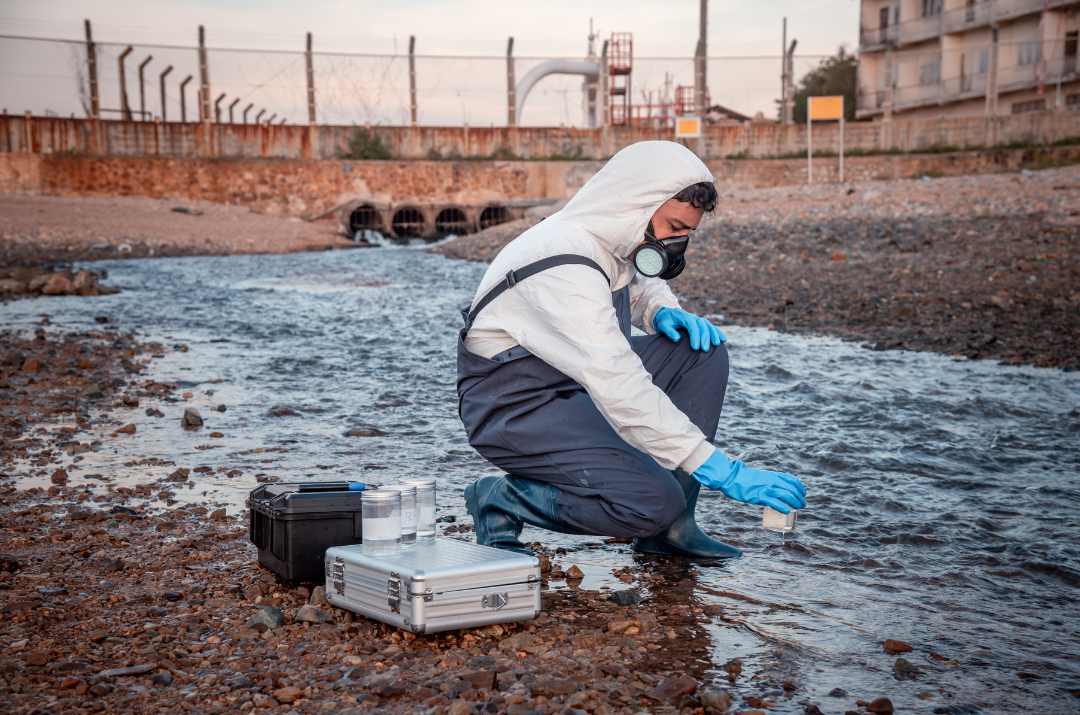
Three major European Union directives, the Drinking Water Directive (EU 2020/2184), the Water Framework Directive (2000/60/EC), and the revised Urban Wastewater Treatment Directive (EU 2024/3019), have recently been updated or strengthened, creating an integrated regulatory ecosystem to protect water quality from source to tap. While these directives address different water matrices and serve distinct regulatory purposes, they share a common foundation: the demand for ultra-sensitive analytical methods capable of detecting emerging contaminants at trace concentrations. At the intersection of these three regulatory directives stands a simple, long-standing technology that has enabled laboratory compliance for decades: nitrogen blowdown evaporation.
The Source-to-Tap Paradigm: Understanding Europe's Integrated Water Policy
The European Union's approach to water quality has evolved from fragmented, substance-specific regulations to a more holistic framework encompassing the entire water cycle 1. This transformation reflects a fundamental recognition: water quality in rivers, lakes, treatment plants, and distribution systems represents a continuum, not isolated domains [1].
Three Directives, One Ecosystem
The Water Framework Directive (WFD) (2000/60/EC) establishes the overarching vision to achieve good chemical and ecological status" in all European surface waters [2]. It sets Environmental Quality Standards for 45 priority substances including PAHs, benzene, mercury, and cadmium in rivers, lakes, and coastal waters, with the goal to meet these standards by 2027 [3]. These standards drive monitoring requirements across entire river basins [3].
The Drinking Water Directive (EU 2020/2184) protects the endpoint of this continuum with health-based parametric values for over 50 substances in water intended for human consumption [4]. Updated limits for PFAS (0.1-0.5 μg/L), pesticides (0.1 μg/L individual, 0.5 μg/L total), and endocrine disruptors like BPA (2.5 μg/L) took effect in 2021-2026 [4]. A key change in the revised directive is the introduction of risk-based catchment assessments, prioritizing source water protection in addition to endpoint treatment [4].
The Urban Wastewater Treatment Directive (UWWTD) (EU 2024/3019), entering force January 1, 2025, closes the loop by mandating quaternary treatment for micropollutant removal from municipal and industrial discharges [5]. With 80% removal efficiency requirements for pharmaceuticals and other emerging contaminants, the directive prevents these substances from re-entering surface waters that serve as drinking water sources downstream [5].
This nested structure allows each of these directives to work together to protect European waters. Surface water quality improvements under the WFD reduce treatment burdens for drinking water facilities. Wastewater treatment enhancements under the UWWTD protect the surface waters monitored under the WFD. Source water protection under the Drinking Water Directive reduces pollutant loads requiring quaternary treatment at wastewater treatment plants.
Regulatory Convergence on Emerging Contaminants
Perhaps most striking is the convergence of all three directives on the same classes of emerging contaminants:
PFAS: The Drinking Water Directive limits total PFAS to 0.5 μg/L (compliance by January 2026), while the 2022 WFD revision proposes PFAS as priority substances in surface waters [6]. The UWWTD's quaternary treatment mandate targets 80% PFAS removal from wastewater effluents [5].
Pharmaceuticals and Personal Care Products: The UWWTD explicitly requires pharmaceutical removal via quaternary treatment, while the WFD's 2022 revision adds multiple pharmaceuticals to priority substance lists [5, 3]. The Drinking Water Directive's watch list mechanism monitors pharmaceutical residues in drinking water sources [4].
Microplastics: All three directives now address microplastic contamination, as a drinking water watch list substance, a WFD emerging pollutant, and a UWWTD monitoring parameter [3, 4, 5].
This regulatory alignment creates an imperative: analytical laboratories must develop flexible, high-throughput methods capable of quantifying the same emerging contaminants across drinking water, surface water, and wastewater matrices.
The Analytical Challenge: Why Sample Preparation Determines Regulatory Success
Meeting detection limits in the low ng/L to sub-ng/L range demands concentration factors of 100 to 1,000-fold. Advanced mass spectrometry provides the specificity and sensitivity for compound identification, but sample preparation workflows deliver the enrichment that makes ultra-trace detection possible [7].
Universal Workflow Architecture
Despite differences in matrix complexity and target analytes, compliant analytical workflows across all three directives follow a remarkably consistent architecture:
-
Sample Collection & Preservation: Matrix-appropriate containers, volumes (50 mL to 1 L), and preservation (refrigeration, acidification, amber bottles).
-
Filtration: Removal of particulates through μm filtration to prevent interference and protect instrumentation.
-
Extraction/Enrichment: Solid-phase extraction for polar compounds (pesticides, pharmaceuticals, PFAS) or liquid-liquid extraction for semi-volatiles (PAHs, chlorinated organics) [7].
-
Evaporation/Concentration: Nitrogen blowdown to reduce extract volume from 3-10 mL to 0.5-1 mL or complete dryness.
-
Solvent Exchange (if needed): Evaporation to dryness and reconstitution in LC- or GC-compatible mobile phase
-
Instrumental Analysis: LC-MS/MS for polar/thermally labile compounds or GC-MS for volatiles and semi-volatiles [7].
This architecture's universality reflects fundamental chemistry: regardless of the matrix, trace organic contaminants must be transferred from aqueous to organic phase, concentrated to achieve adequate sensitivity, and presented to instrumentation in a compatible form.
The Concentration Bottleneck
Survey data from environmental laboratories reveals that sample preparation—particularly the evaporation/concentration step—represents the primary bottleneck limiting throughput. Before implementing automated nitrogen evaporation, laboratories commonly report:
- Manual drying in fume hoods: 2+ hours per sample, sometimes without achieving complete dryness
- Sequential processing: One sample at a time, limiting daily capacity to 3-5 samples
- Inconsistent recovery: Variable nitrogen flow from fume hood spigots creating sample-to-sample variation
- Incomplete concentration: Inability to evaporate to dryness preventing optimal sensitivity
These constraints are unsustainable in laboratories required to meet and follow EU water regulations. Especially with the need to analyze hundreds to thousands of samples annually across the three directives.
Nitrogen Evaporation: The Universal Solution Across Water Matrices
Nitrogen blowdown evaporation occupies a unique position in water quality testing: it functions identically whether concentrating drinking water pesticide extracts, surface water PAH samples, or wastewater pharmaceutical eluates.
The Science Behind Universal Applicability
Nitrogen evaporation's effectiveness across diverse applications stems from three fundamental mechanisms that operate independent of matrix or analyte:
Vapor Displacement: Continuous nitrogen flow removes vapor-saturated air from above the liquid surface, disrupting the vapor-liquid equilibrium and driving evaporation. This process accelerates solvent removal for any volatile liquid, including methanol from pesticide SPE eluates, dichloromethane from PAH extractions, or acetonitrile from pharmaceutical preparations.
Controlled Heating: Gentle temperature control (35-60°C depending on solvent and analyte thermostability) increases molecular kinetic energy, enhancing the liquid-to-vapor transition. Water bath or dry block heating is available to provide uniform temperature across all sample positions, ensuring reproducible evaporation rates.
Inert Atmosphere Protection: Nitrogen's chemical inertness prevents oxidative degradation during evaporation which is critical for easily oxidized compounds such as certain pesticides, pharmaceuticals, hormones, and PAHs.
Quantifying the Efficiency Gains
Real-world implementation data demonstrates nitrogen evaporation's impact across all three regulatory domains:
University of Cincinnati Environmental Engineering Department: This lab focuses on analysis of surface water and wastewater for PFAS, pharmaceuticals, and personal care products [8]. Transitioning from manual fume hood drying to a 12-position N-EVAP delivered 20× faster processing (all 10 samples concentrated in one hour versus 20+ hours sequentially) [8]. Additionally, complete evaporation to dryness enables accurate trace detection, and elimination of variability from uncontrolled gas flow [8].
Microbac Laboratories: This laboratory's focus is on analysis of drinking water for PFAS compounds, using EPA Methods 537.1 and 533 [9]. By upgrading to higher-capacity automated nitrogen evaporators, they were able to double sample throughput with the same benchtop footprint [9]. Enhanced thermal efficiency through improved water bath design provided consistent evaporation rates across all positions with automated timer functionality [9].
Laboratory Efficiency in the Integrated Regulatory Environment
The convergence of EU water directives creates both challenges and opportunities for analytical laboratories. Facilities once specializing in drinking water compliance or surface water monitoring now find themselves serving multiple regulatory programs simultaneously. These additions require operational excellence across sample types, analytical methods, and data management systems.
ISO/IEC 17025: The Quality Foundation
All three directives implicitly or explicitly require analytical testing by laboratories accredited to ISO/IEC 17025 or equivalent standards. This international standard establishes requirements for: [10]
- Technical competence: Qualified personnel, validated methods, calibrated equipment, appropriate facilities
- Quality management: Documented procedures, internal audits, management review, continuous improvement
- Data integrity: Chain of custody, traceability, equipment qualification, proficiency testing participation
- Impartiality: Freedom from conflicts of interest, objective reporting, protection from undue pressure
Critically, ISO/IEC 17025 accreditation is method-specific and laboratories must validate and demonstrate competence for each test and sample preparation method in their scope. For nitrogen evaporation, this includes:
- Documenting temperature and gas flow optimization during method validation
- Evaluating analyte recovery across complete extraction-evaporation-analysis workflows
- Establishing standard operating procedures specifying evaporation time, temperature, and endpoint criteria
- Processing method blanks, matrix spikes, and internal standards to monitor evaporation performance
- Performing regular equipment qualification verifying temperature accuracy and flow rate consistency
Automation and LIMS Integration
Leading environmental laboratories increasingly integrate sample preparation equipment with Laboratory Information Management Systems (LIMS) for enhanced efficiency and compliance: [11]
- Automated sample tracking: Barcode scanning at evaporation step captures sample ID, start time, target endpoint
- Workflow management: LIMS schedules evaporation runs, alerts technicians to completion, triggers next workflow step
- Quality control automation: LIMS flags samples failing blank checks, recovery criteria, or internal standard performance during evaporation
- Data integrity: Complete audit trails document evaporation parameters, operator, date/time, deviations
- Regulatory reporting: Automated generation of compliance reports for Drinking Water Directive, WFD, and UWWTD requirements
This integration transforms nitrogen evaporation from a standalone manual operation to an orchestrated step in an end-to-end automated workflow.
Future Horizons: Emerging Contaminants and Analytical Innovation
The 2025 regulatory landscape represents not an endpoint but an inflection point. New trends and developments will shape water quality monitoring over the next decade:
Expanding Contaminant Lists
The WFD's 2022 revision proposes adding 25 substances (bringing the total to 74 priority pollutants), while the Drinking Water Directive's watch list mechanism enables rapid response to emerging concerns [12]. The UWWTD's initial focus on 12 indicator pharmaceuticals will likely expand as monitoring data reveal additional compounds requiring control.
Co-Occurrence and Mixture Toxicity
Recent research documenting the co-occurrence of microplastics, PFAS, pharmaceuticals, and antibiotic resistance genes in water systems challenges single-analyte approaches [13]. Laboratories must develop comprehensive multi-class methods capable of analyzing 100-200+ compounds per sample. These increased demands intensify the need for efficient, high-capacity concentration systems.
Wastewater-Based Epidemiology
The COVID-19 pandemic demonstrated wastewater surveillance's public health value, driving expansion to pharmaceuticals, illicit drugs, and antimicrobial resistance markers [14]. These applications employ identical SPE-nitrogen evaporation-LC-MS/MS workflows as regulatory compliance testing, creating synergies for laboratories serving both programs [14].
Selecting Nitrogen Evaporation Systems for Integrated Water Testing
Laboratories supporting all three EU water directives should consider several factors when selecting concentration technology:
Capacity and Throughput
- Small facilities (10-20 samples/day across all programs): 12 or 24-position N-EVAPs provide adequate capacity with minimal bench space
- Medium laboratories (20-50 samples/day): 24 or 34-position models balance throughput and footprint
- High-volume reference labs (50-200+ samples/day): 45-position systems or multiple units operating in parallel deliver necessary capacity
Multi-Matrix Flexibility
Universal sample holders accepting 10-30 mm outside diameter vials enable processing of:
- Small-volume pesticide extracts (1.5-2 mL microtubes) from drinking water SPE
- Medium-volume PAH extracts (10-15 mL centrifuge tubes) from surface water LLE
- Large-volume pharmaceutical eluates (15-50 mL tubes) from wastewater SPE
Individual Position Control
Chrome-plated precision needle valves allowing independent nitrogen flow adjustment enable simultaneous processing of:
- Volatile solvents (dichloromethane) at lower flow rates to prevent analyte loss
- Higher-boiling solvents (ethyl acetate, methanol) at increased flow for faster evaporation
- Samples approaching endpoint at reduced flow for precise final volume control
Temperature Precision
- Water bath models: Reliable, uniform heating via mechanical thermostat (±2-3°C) suitable for routine applications
- Dry block heaters: Enhanced temperature uniformity (±1°C), rapid heat-up, and programmable temperature profiles for methods requiring tight control
Automation Options
- Manual models: Simple operation, lower cost, reliability for routine workflows with consistent sample types
- Automated systems: Programmable timers, nitrogen flow control, and LIMS integration for high-throughput laboratories and enhanced reproducibility
Sample Preparation Excellence as the Foundation for Water Quality Protection
The Water Framework Directive's vision of healthy aquatic ecosystems, the Drinking Water Directive's mandate for safe public water supplies, and the Urban Wastewater Treatment Directive's commitment to pollutant elimination depend on thousands of analytical laboratories across Europe to generate accurate, defensible data. This convergence of EU water directives creates unprecedented demands for efficiency, flexibility, and quality. Single facilities must often support drinking water compliance testing, surface water priority pollutant monitoring, and wastewater surveillance programs simultaneously. This requires versatile sample preparation infrastructure capable of processing diverse matrices while maintaining method-specific optimization.
While sophisticated mass spectrometry instrumentation provides the specificity and sensitivity for compound identification, quality sample preparation workflows make ultra-trace detection possible. Nitrogen blowdown evaporation, refined over 65 years for analytical chemistry applications, provides the gentle, controlled, reproducible concentration required across regulatory domains.
As European water policy continues evolving to address emerging pollutants, the fundamental analytical challenges remain the same: achieving adequate sensitivity, maintaining data quality, and processing sufficient sample numbers to characterize water quality. Through meticulous attention to every step of the analytical workflow, from sample collection through extraction, concentration, and instrumental analysis, these laboratories safeguard both aquatic environments and the 500 million people who depend on Europe's water resources.
Optimize your laboratory for integrated EU water quality compliance. Contact Organomation to discuss how N-EVAP nitrogen evaporators can enhance your facility's capabilities across drinking water, surface water, and wastewater testing programs. Our team provides complimentary method consultation and application support for multi-matrix environmental analysis. Visit www.organomation.com or call +1 (978) 838-7300 to learn more about our complete line of sample preparation solutions supporting Europe's water quality framework.
Citations:
- https://www.europenowjournal.org/2018/12/10/water-quality-law-in-the-us-and-eu-a-comparison-of-the-clean-water-act-and-water-framework-directive/
- https://eur-lex.europa.eu/eli/dir/2000/60/oj
- https://eur-lex.europa.eu/eli/dir/2008/105/2013-09-13
- https://eur-lex.europa.eu/eli/dir/2020/2184/oj
- https://eur-lex.europa.eu/eli/dir/2024/3019/oj/eng
- https://www.eea.europa.eu/en/european-zero-pollution-dashboards/indicators/treatment-of-drinking-water-to-remove-pfas-signal
- https://pmc.ncbi.nlm.nih.gov/articles/PMC10864661/
- https://blog.organomation.com/blog/manual-to-automated-solvent-drying-is-it-worth-the-switch
- https://blog.organomation.com/blog/nitrogen-dryer-increases-lcms-sample-prep-productivity-by-400
- https://intuitionlabs.ai/articles/iso-17025-laboratory-accreditation
- https://www.scispot.com/blog/how-water-testing-laboratories-can-improve-efficiency-with-an-environmental-lims
- https://environment.ec.europa.eu/publications/proposal-amending-water-directives_en
- https://www.frontiersin.org/journals/microbiology/articles/10.3389/fmicb.2025.1699325/full
- https://www.chromatographyonline.com/view/wastewater-surveillance-of-pharmaceuticals-and-genes-challenges-and-opportunities