
A recent infographic shared by one of Organomation's distributors in Thailand highlights a "Complete Solution for Feed Analysis," featuring three distinct workflows: Kjeldahl protein analysis, Soxhlet fat extraction, and fiber analysis for animal feed, pet food, and aquafeed testing. For feed testing laboratories evaluating their instrumentation needs, understanding where nitrogen blowdown evaporators complement these established workflows can reveal opportunities to expand analytical capabilities beyond basic proximate analysis.
Understanding the Three Core Feed Analysis Workflows
Crude protein determination via the Kjeldahl method remains the gold standard in feed testing, involving digestion of the sample in concentrated sulfuric acid with a catalyst, followed by distillation to capture ammonia and titration to quantify nitrogen content. This workflow, as detailed in basic laboratory manuals for feed analysis, requires roughly two hours of digestion time before the sample is cooled, diluted, and prepared for titration.
Crude fat analysis relies on Soxhlet extraction, a technique developed by Franz von Soxhlet that uses continuous solvent cycling to extract lipids from a solid sample matrix. The solvent is heated to boiling in a flask, rises as vapor through a side pipe into a condenser, and drips back down through the sample-containing thimble, repeating this cycle until extraction is complete. Once extraction finishes, the solvent is boiled off and the extracted fat is dried and weighed to determine total fat content.
Fiber analysis, meanwhile, follows a different path entirely. Using methods like Weende (crude fiber) or Van Soest (NDF/ADF), samples are treated with acid and base solutions, filtered, dried, and in some protocols incinerated in a muffle furnace to determine ash-free fiber content. This process is fundamentally gravimetric and doesn't typically intersect with solvent evaporation technology.
The Critical Post-Extraction Step Most Labs Overlook
Here's where the workflow gets interesting for feed labs looking to expand their testing menu. Once Soxhlet extraction pulls fat out of a feed sample, that fat exists dissolved in solvent, and simply weighing crude fat isn't always the end goal. Many labs need to go further, characterizing exactly which fatty acids are present, screening for contaminants, or confirming compliance with regulatory limits.
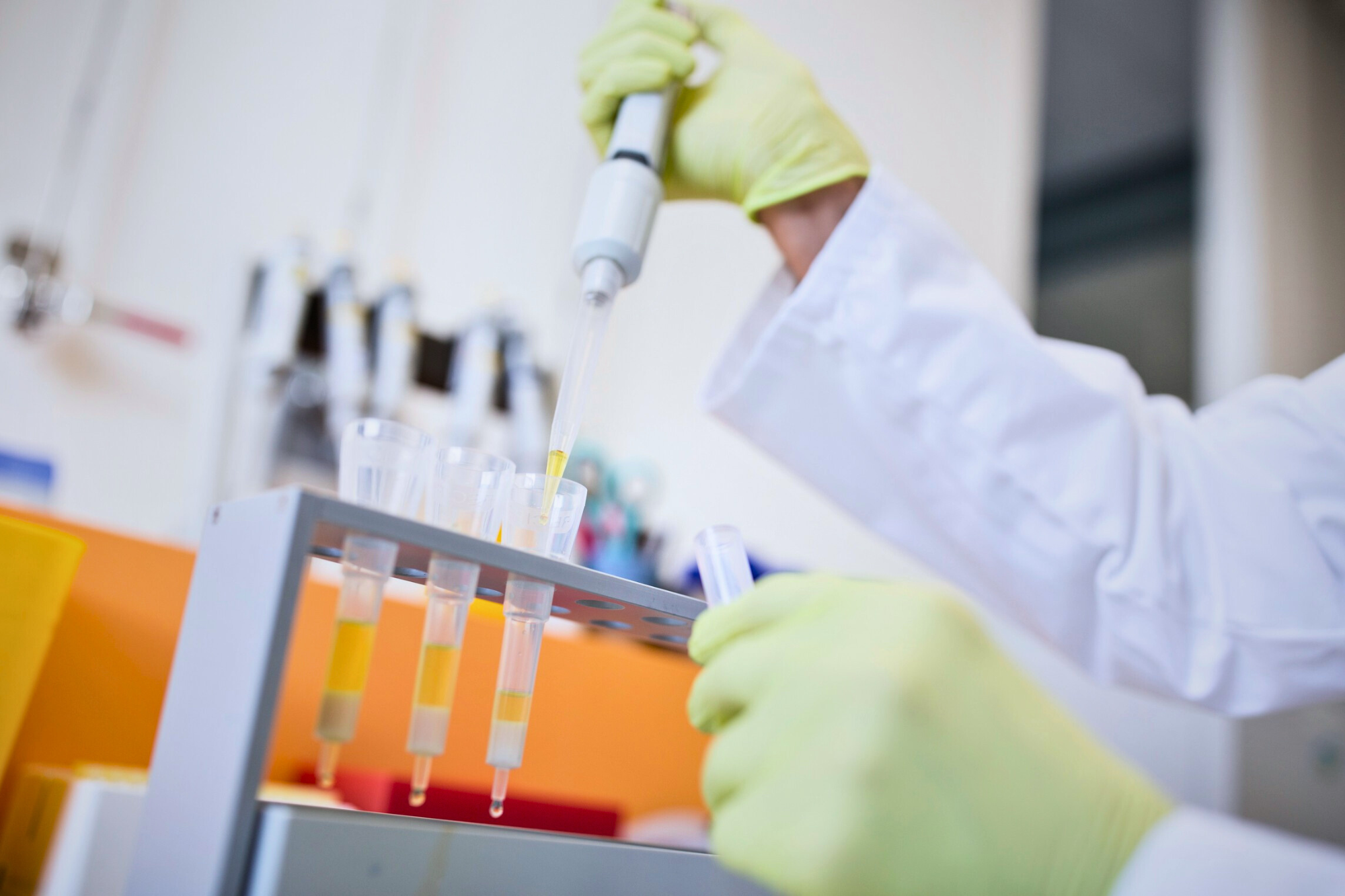
According to a detailed breakdown of Soxhlet extraction methodology, post-extraction processing typically involves collecting the extract-containing solvent, then using rotary evaporation or nitrogen blowdown to reduce solvent volume and concentrate the extract before final analysis. This concentration step is not optional when the downstream analysis is chromatographic. As the source explains, samples must be adequately concentrated before they're ready for GC or LC-based instrumental procedures.
Nitrogen blowdown evaporation, sometimes called evaporation to dryness, is defined as a gentle process of removing solvent under a controlled nitrogen stream, meant to isolate a solute or analyte from solution without degrading it through excessive heat. This matters enormously for lipid samples, which can oxidize or degrade fatty acid profiles if concentrated too aggressively or exposed to excess heat and oxygen. Organomation's own resources on the topic note that N-EVAP systems use adjustable nitrogen flow technology, giving technicians full control over evaporation rate with no wasted nitrogen gas.
Real-World Scenarios Where This Overlap Happens
Feed testing laboratories that already run Soxhlet extraction as part of standard proximate analysis are natural candidates for nitrogen blowdown integration in several specific situations.
- Fatty acid methyl ester (FAME) analysis: after lipids are extracted for crude fat determination, labs profiling fat quality or composition (increasingly demanded for premium pet food and aquafeed formulations) need to evaporate solvent under nitrogen before GC analysis of the fatty acid profile.
- Pesticide residue and mycotoxin screening: raw feed ingredients and premixes often require solvent extraction followed by nitrogen blowdown concentration before GC-MS or LC-MS confirmatory testing, a workflow explicitly outlined in EPA-style extraction methods
- Veterinary drug residue testing: contaminant screening in animal feed additives frequently follows the same extract-then-concentrate-then-inject pattern that nitrogen evaporators are built for
- Research and quality control applications: labs doing more than routine crude fat weighing, such as lipidomics work on aquafeed formulations, use nitrogen evaporators specifically because gentle solvent removal preserves lipid integrity better than heat-based alternatives
A comparative study on lipid extraction methods in meat science illustrates this well. Researchers using modified Soxhlet (Soxtec) methods evaporated residual solvent after extraction, then dried samples in a forced-draft oven to remove any remaining trace solvent before analysis. While this particular study used oven drying, the same principle applies across the industry: solvent must be fully and carefully removed post-extraction, and nitrogen blowdown offers a lower-temperature, more analyte-friendly alternative to oven-based drying, especially when the goal is preserving compound integrity for subsequent chromatographic work.
Why This Matters for the Thai Laboratories
Feed and aquafeed producers in Southeast Asia face increasing export requirements around fatty acid composition labeling, contaminant testing, and quality certifications, particularly for markets in the EU, US, and Japan. A lab equipped with the Kjeldahl, Soxhlet, and fiber analysis instruments shown in the original infographic has covered the basic proximate analysis requirements. But labs that also need to answer more specific questions, like exact omega-3 content in aquafeed, pesticide residues in raw grain inputs, or veterinary drug carryover in premixes, will need a concentration step between extraction and instrumental analysis.
This is precisely the gap nitrogen blowdown evaporators fill. They're not a replacement for Soxhlet extractors, Kjeldahl systems, or fiber analyzers; they're the connective tissue between extraction-based sample prep and the chromatographic or mass spectrometric analysis that regulatory compliance and premium product positioning increasingly demand.
For feed testing labs already invested in Soxhlet-based fat extraction, the addition of a nitrogen blowdown evaporator represents a low-friction expansion of testing capability rather than a competing technology. It transforms a lab capable of routine proximate analysis into one equipped for compositional profiling, residue screening, and export-grade quality documentation, capabilities that matter increasingly as global feed and aquafeed markets tighten their analytical requirements.