
A laboratory can replace the hydrogen cylinder supplying a flame ionization detector with an on-site hydrogen generator without changing the GC carrier gas. Helium, nitrogen, or another existing carrier can remain in place, so the laboratory can avoid the retention-time and method changes associated with converting the carrier gas to hydrogen.
The distinction matters. Hydrogen used as FID detector fuel supports the flame after analytes leave the column. Carrier gas transports analytes through the column and influences chromatographic velocity, efficiency, and retention. Replacing the fuel source is therefore fundamentally different from changing the carrier gas.
A detector-fuel conversion still requires proper generator sizing, pressure verification, leak testing, installation qualification, and confirmation that system suitability and quality-control criteria remain acceptable. It should not, however, require the laboratory to translate the chromatographic method simply because the detector’s hydrogen now comes from a generator rather than a cylinder.
What Gas Does a GC-FID Need?
A flame ionization detector burns hydrogen in air to create a flame at the detector jet. Organic compounds exiting the GC column enter that flame, form ions during combustion, and generate an electrical current related to the amount of carbon reaching the detector. Shimadzu’s explanation of flame ionization detection identifies hydrogen and air as the FID detector gases, with helium or nitrogen commonly used as makeup gas.
These gas streams perform different jobs:
|
Gas stream |
Function in GC-FID |
Does cylinder replacement change it? |
|
Carrier gas |
Moves the sample through the column |
No—the existing carrier gas can remain unchanged |
|
Hydrogen |
Fuels the FID flame |
Yes—the generator replaces the H2 cylinder |
|
Air or zero air |
Supplies the oxidizer for the flame |
No, unless the laboratory also installs a zero-air generator |
|
Makeup gas |
Optimizes flow through the detector |
No |
The Agilent 7890B GC Advanced Operation Manual lists 30 mL/min hydrogen and 400 mL/min air as suggested starting flows for several standard FID configurations. These values are useful for preliminary planning, but the correct flow and supply pressure must come from the manual for the laboratory’s exact GC and detector configuration.
Can a Generator Replace the Cylinder?
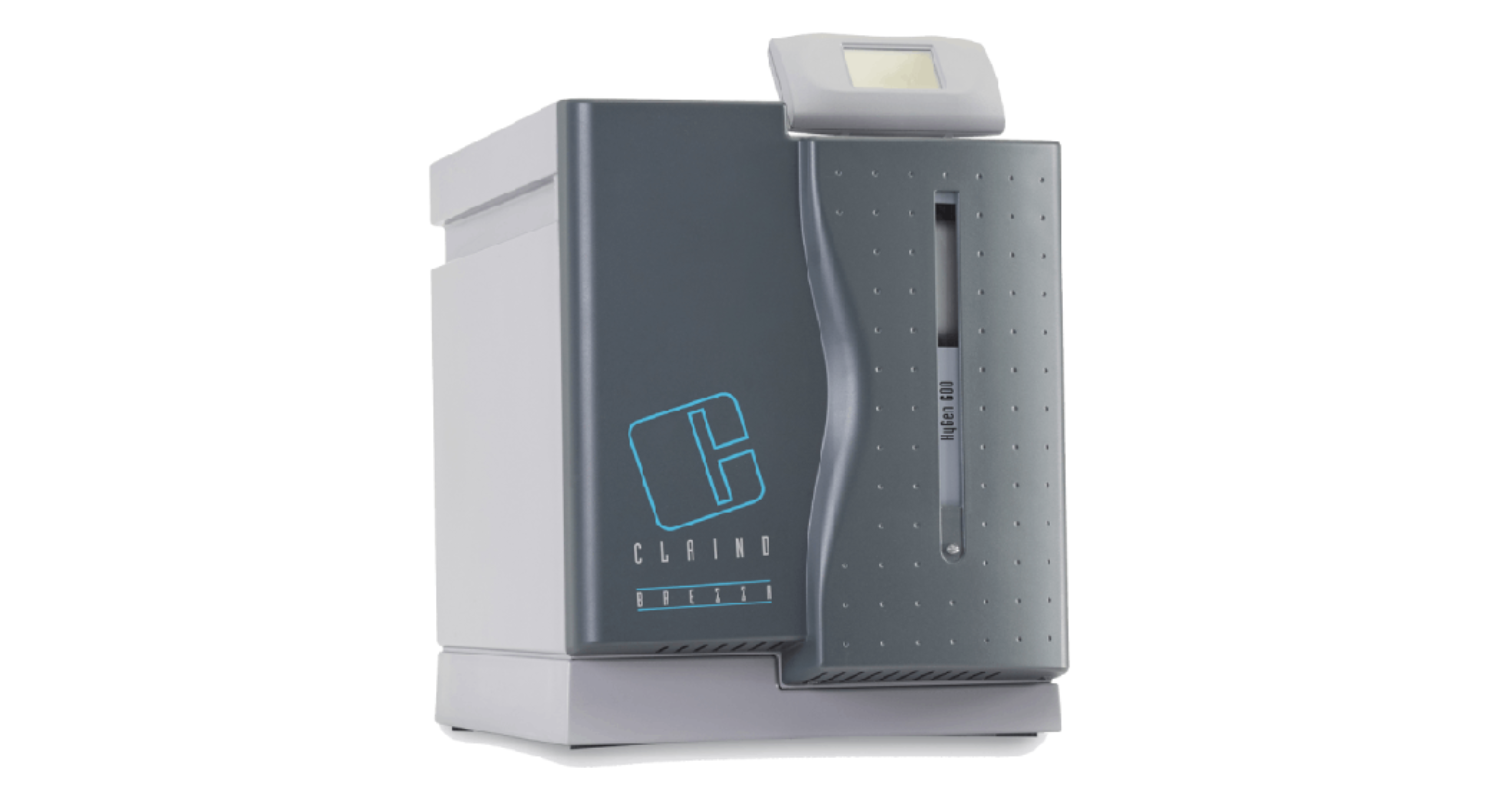
Yes. A correctly specified hydrogen generator can replace the compressed-hydrogen cylinder used as GC-FID detector fuel. Claind designed its H Series hydrogen generator to provide hydrogen both as GC carrier gas and as flame fuel for FID, NPD, and FPD detectors.
This change affects the source of detector hydrogen, not the chromatographic separation. If helium remains the carrier gas, for example, the column receives the same carrier gas after installation. The existing column flow, oven program, inlet mode, split ratio, and retention-time framework can remain unchanged unless the laboratory identifies a separate reason to adjust them.
That does not mean the installation should bypass laboratory change control. Regulated and quality-managed laboratories should document the new utility source, verify delivered pressure and flow, check for leaks, evaluate blanks and baseline behavior, run applicable system-suitability tests, and revise gas-supply and maintenance SOPs. The appropriate level of qualification depends on the method, laboratory quality system, instrument manufacturer, and applicable regulatory requirements.
Detector Fuel vs. Carrier Gas
Confusion between detector fuel and carrier gas can make a relatively simple cylinder-replacement project appear more complicated than it is.
|
Question |
Detector-fuel replacement |
Carrier-gas conversion |
|
What changes? |
Source of hydrogen supplied to the detector flame |
Gas moving the sample through the column |
|
Must helium or nitrogen be removed? |
No |
Usually yes, from the converted method |
|
Are retention times expected to change because of the gas source? |
No |
Often |
|
Is method translation normally required? |
Not solely because the H2 fuel source changes |
Commonly |
|
Are column-flow and oven-program changes expected? |
No |
They may be needed |
|
Is installation verification required? |
Yes |
Yes |
|
Is method revalidation potentially required? |
Usually limited to change-control requirements |
Often more extensive, especially for regulated methods |
Hydrogen can be used as either carrier gas or detector fuel, and some laboratories use it for both. The Agilent 7890 Series GC Safety Manual recognizes hydrogen as a GC carrier gas and as fuel for FID and NPD detectors. The intended use must therefore be stated clearly when sizing the generator and reviewing safety controls.
For laboratories that want to remove hydrogen cylinders but are not ready to evaluate helium-to-hydrogen carrier-gas conversion, detector-fuel replacement provides a practical first step.
Why Replace Hydrogen Cylinders?
Reduce cylinder handling
Compressed-gas cylinders require receiving, inventory management, secure storage, movement on approved carts, regulator changes, and return of empty cylinders. The NIH compressed-gas safety guidance requires cylinders to be properly identified, secured, transported with appropriate equipment, and stored in ventilated locations; flammable-gas cylinders require additional precautions.
An on-site generator removes routine hydrogen-cylinder deliveries and changeovers from the GC workflow. It does not remove the need for hydrogen safety procedures, but it eliminates several manual tasks associated specifically with high-pressure cylinders.
Avoid running out during a sequence
An empty cylinder or an improperly managed changeover can interrupt detector operation. A generator instead produces hydrogen from water in response to demand. The Claind H Series is designed to generate hydrogen in proportion to actual consumption while minimizing accumulated gas.
Generator reliability still depends on preventive maintenance, suitable water quality, electrical power, and proper sizing. Laboratories with especially critical operations should determine whether a backup strategy or redundant generator configuration is justified.
Reduce stored hydrogen inventory
A hydrogen generator creates gas as it is required rather than storing a full high-pressure cylinder. The H Series uses proton-exchange-membrane technology and is designed for demand-based hydrogen production with minimal internal accumulation.
Generated hydrogen remains flammable. OSHA identifies standards that may apply to employers storing, using, or producing hydrogen. The installation must follow the GC manufacturer’s instructions, generator documentation, facility environmental-health-and-safety requirements, and applicable fire and building codes.
Create a scalable detector-gas system
A laboratory can size one generator for several detectors if the unit can maintain the required purity, pressure, and peak simultaneous flow. The Claind H Series product literature identifies 200, 400, and 600 Nml/min models and permits as many as four units to be connected in parallel.
Centralization can simplify gas management, but it also creates a shared point of failure. Laboratories should weigh centralized capacity against separate generators, standby capacity, or other continuity measures.
What Purity Does FID Need?
Gas purity matters because contamination in detector gases can contribute to background signal, noise, and analytical artifacts. The Thermo Scientific FOCUS GC installation manual specifies high-purity hydrogen for detector fuel and calls for less than 1 ppm total hydrocarbons after purification for that platform.
The H Series produces hydrogen at 99.9999% purity, with oxygen below 1 ppm and a stated dew point better than -70°C under the manufacturer’s specified conditions. Those specifications position the H Series for trace-analysis and GC applications, but laboratories should compare the complete generator specification with the requirements of their instrument and method rather than selecting on the number of “nines” alone.
Important factors include:
- Hydrogen purity.
- Total-hydrocarbon contamination.
- Oxygen concentration.
- Moisture or dew point.
- Delivered pressure at the instrument under peak demand.
- Materials and cleanliness of the distribution tubing.
- Condition and placement of point-of-use filters, if required.
Purity at the generator outlet does not guarantee purity at the detector if the distribution line is contaminated or incompatible. Tubing material, fittings, installation practices, and leak integrity all influence the delivered gas.
How Much Hydrogen Does an FID Use?
Hydrogen demand depends on the GC model, detector configuration, method settings, and whether the same source supplies any additional functions. Agilent documentation gives 30 mL/min as a suggested FID hydrogen flow for several standard configurations and lists a 24–60 mL/min operating range for the cited 7890B system. Agilent’s FID design and troubleshooting guidance also describes approximately 30–35 mL/min hydrogen as a general optimization starting point.
The generator should be selected from the maximum simultaneous requirement, not from the average number of instruments usually operating. A preliminary detector-fuel calculation is:

The final selection must also account for:
- Detector ignition and startup behavior.
- Instrument-specific supply-pressure requirements.
- Distribution-line pressure drop.
- Other hydrogen-consuming detectors or instruments.
- Planned expansion.
- Desired operating reserve.
- Whether hydrogen is also used as carrier gas.
- Continuity or redundancy requirements.
For illustration, four detectors each set to 30 mL/min would create a nominal steady detector-fuel demand of 120 mL/min before allowance for peak behavior, reserve capacity, other uses, or expansion. This example is not a model recommendation; actual instrument requirements must be verified before selection.
Choosing an H Series Model
|
Model |
Nominal hydrogen flow |
Published outlet-pressure range |
Published hydrogen purity |
|
H 200 |
200 Nml/min |
2–8 bar |
99.9999% |
|
H 400 |
400 Nml/min |
2–8 bar |
99.9999% |
|
H 600 |
600 Nml/min |
2–8 bar |
99.9999% |
Claind states that as many as four H Series modules can be connected in parallel, allowing the system to scale for larger demand. Explore the complete H Series hydrogen generator specifications or review Organomation’s guide to hydrogen generators for chromatography.
A model should not be selected simply by dividing its rated output by a generic FID flow. Organomation should review the actual detector settings, required instrument inlet pressure, simultaneous-use pattern, distribution design, and future capacity before recommending a configuration.
Installation Checklist
Confirm instrument requirements
Check the GC site-preparation or installation manual for:
- Required hydrogen purity.
- Minimum and maximum inlet pressure.
- Normal detector flow.
- Peak or ignition behavior.
- Approved tubing and fittings.
- Required traps or purifiers.
- Hydrogen detection or ventilation requirements.
Both the Thermo Scientific GC installation guidance and Agilent safety documentation instruct users to verify gas purity, plumbing, flow, and leak integrity for hydrogen service.
Calculate peak demand
List every detector that may operate simultaneously. Include any other equipment connected to the source and identify whether hydrogen is being used only as detector fuel or also as carrier gas.
Review the distribution system
Keep lines appropriately sized and as short as practical. Use materials recommended by the GC and generator manufacturers, avoid contamination during installation, and evaluate the pressure drop between the generator and the most distant instrument.
Leak-test every connection
Hydrogen and air can form flammable mixtures. Agilent directs users to leak-test connections, lines, and valves before operating the GC and to shut off hydrogen at its source before working on the instrument. Thermo Fisher likewise calls for pressure and leak testing of hydrogen lines before use.
Follow the approved leak-test method from the instrument manufacturer and facility safety program. Do not improvise with incompatible leak-detection materials or procedures.
Verify actual detector flow
Supply pressure and setpoint alone do not prove that the detector receives the correct flow. The Agilent 8860 GC troubleshooting manual advises measuring actual FID flow and states that actual values should be within ±10% of their setpoints for that system.
Hydrogen and air should be measured separately using the manufacturer’s procedure. Agilent warns against allowing hydrogen and air to enter a flow meter together because they can form an explosive mixture.
Document analytical performance
After installation, evaluate the parameters required by the laboratory’s quality system. Depending on the application, this may include:
- Blank and baseline response.
- Noise and drift.
- Retention-time repeatability.
- Detector response.
- Calibration performance.
- System suitability.
- Method-specific QC samples.
- Alarm and shutdown behavior.
Because the carrier gas and chromatographic conditions remain unchanged, major shifts in retention should not be expected solely from replacing the detector-fuel source. Unexpected changes should trigger troubleshooting of flows, leaks, gas purity, plumbing, detector condition, or instrument configuration.
Do You Still Need Zero Air?
Yes. Replacing the hydrogen cylinder addresses the fuel side of the FID flame; the detector still requires air as the oxidizer. If the current air source remains suitable, the laboratory can continue using it. If air quality or cylinder logistics are also problematic, a zero-air generator can complete the detector-gas system.
Organomation’s zero-air generators for analytical chemistry remove hydrocarbons from the air stream for FID and related applications. The Claind AirGen GC supplies up to 3,000 mL/min and produces air with total hydrocarbons below 0.1 ppm under the manufacturer’s stated conditions.
Hydrogen and zero-air capacity should be calculated independently because the FID consumes substantially more air than hydrogen. A gas-supply assessment should also account for compressor requirements, available electrical service, noise, heat, ventilation, and maintenance access.
When a Generator May Not Fit
An on-site hydrogen generator is not automatically the best solution for every GC laboratory. Additional evaluation is warranted when:
- The GC requires a pressure or purity outside the generator specification.
- Peak hydrogen demand approaches or exceeds available capacity.
- Electrical power or suitable water is unreliable.
- The laboratory cannot accommodate required ventilation or safety controls.
- The installation is in a classified or otherwise restricted location.
- The GC manufacturer has not approved the proposed configuration.
- The method or quality system imposes special gas-source requirements.
- A single shared generator would create unacceptable operational risk.
The correct decision compares the complete installation—not merely the generator’s rated flow—with the laboratory’s analytical, operational, safety, and quality requirements.
Frequently Asked Questions
Can a hydrogen generator supply an FID while helium remains the carrier gas?
Yes. Hydrogen supplied to the FID flame is separate from the gas supplied to the GC inlet and column. A laboratory can retain helium as the carrier gas while a generator supplies hydrogen detector fuel.
Does replacing an FID hydrogen cylinder change retention times?
Not by itself. Retention behavior is governed by the chromatographic method, including carrier gas, column flow, temperature program, column dimensions, and inlet conditions. If those remain unchanged, replacing the detector-fuel source should not require retention-time translation. Installation qualification and system-suitability testing remain appropriate.
Does an FID hydrogen generator require method revalidation?
Replacing detector fuel does not inherently change the separation mechanism, but the laboratory must follow its change-control system. Regulated laboratories should determine the required qualification or verification from their SOPs, method requirements, instrument documentation, and governing regulations.
Can one hydrogen generator supply multiple GC-FIDs?
Yes, if the generator can maintain the required purity, pressure, and maximum simultaneous flow at every instrument. Claind offers 200, 400, and 600 Nml/min H Series models and supports parallel connection of multiple modules.
How much hydrogen does an FID use?
Many standard GC-FID configurations use approximately 30–40 mL/min hydrogen, but requirements vary. The Agilent 7890B operating documentation lists 30 mL/min as a suggested flow for several standard configurations and a 24–60 mL/min operating range for that instrument. Always use the specifications for the exact GC model and detector setup.
What purity hydrogen is required for GC-FID?
The requirement is instrument- and application-specific. Thermo Fisher documentation for one GC platform specifies 99.995% hydrogen with less than 1 ppm total hydrocarbons after purification. Claind’s H Series publishes 99.9999% hydrogen purity, oxygen below 1 ppm, and a dew point better than -70°C under stated conditions.
Is generated hydrogen safe?
A generator reduces the quantity of stored hydrogen by producing gas on demand, but hydrogen remains flammable. Installation requires approved plumbing, leak testing, ventilation, appropriate shutdown controls, training, and compliance with manufacturer instructions and applicable safety requirements.
Will a hydrogen generator improve the FID baseline?
A properly specified generator can provide high-purity hydrogen, but baseline performance also depends on zero-air purity, makeup gas, carrier gas, tubing cleanliness, detector condition, column bleed, and the method. A generator should not be presented as a cure for every baseline problem.
Does the laboratory still need hydrogen cylinders as backup?
That depends on the cost of downtime, generator configuration, maintenance strategy, and facility policy. Some laboratories accept a single generator; others use parallel units, a standby generator, or an approved emergency gas supply. The continuity plan should be designed during system qualification.
Replace the Cylinder, Not the Method
For laboratories already operating GC-FID systems, replacing hydrogen cylinders does not have to mean converting the carrier gas or redeveloping the chromatographic method. A properly sized generator can supply the detector flame while helium, nitrogen, column flow, oven programming, and established analytical conditions remain in place.
The key is to treat the project as an engineered detector-gas upgrade: verify instrument requirements, calculate peak demand, select adequate purity and pressure, install clean gas lines, leak-test the system, measure actual flow, and document analytical performance.
Organomation can review the laboratory’s GC models, detector count, flow settings, supply-pressure requirements, operating schedule, and expansion plans to recommend an appropriate H Series configuration.
Request a GC-FID hydrogen generator sizing assessment