
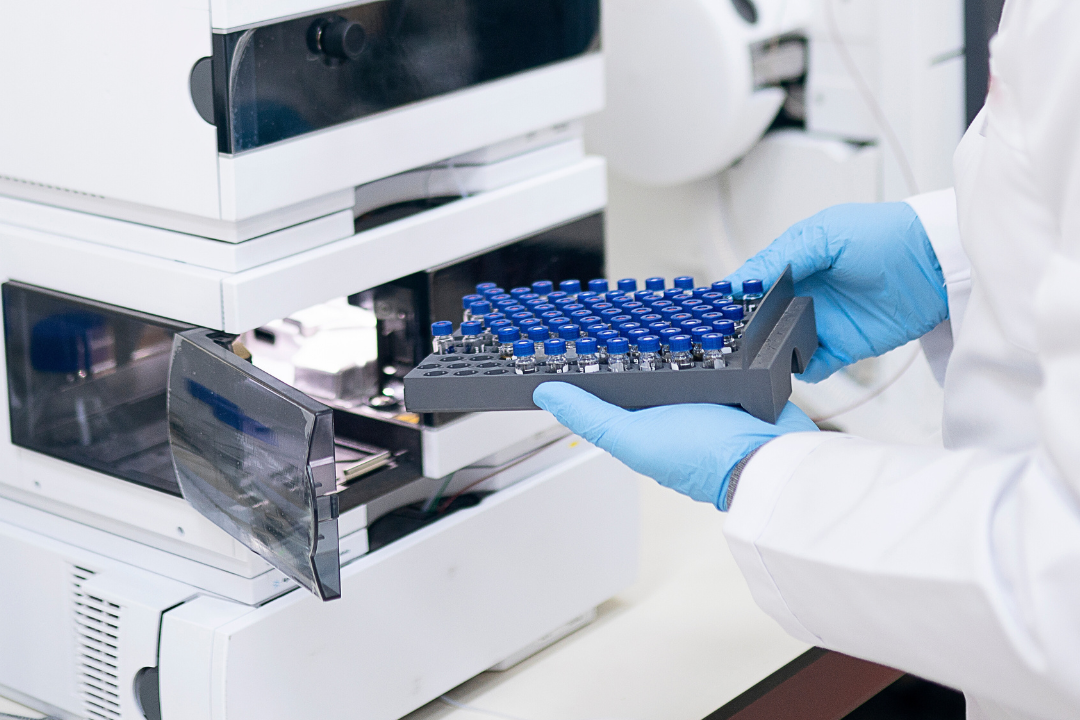
As the General Manager of Organomation and the host of the Concentrating on Chromatography podcast, I’ve had the distinct privilege of sitting down with some of the most innovative minds in an up-and-coming area: Comprehensive Two-Dimensional Gas Chromatography (GCxGC). Whether we are discussing the chemical signatures of human decomposition or the complexities of the gut microbiome, one theme consistently rises to the surface: the quality of your final analysis is entirely dependent on your GCxGC sample preparation.
Comprehensive Two-Dimensional Gas Chromatography (GCxGC) has revolutionized our ability to see into complex samples by vastly increasing peak capacity. However, the added power of a second dimension means that our sample preparation must be more precise than ever. Drawing on the expertise of my guests, I’ve compiled the critical lessons for any lab looking to optimize their multidimensional workflows.
1. Start with the Fundamentals: The 1D Foundation
One of the most valuable insights came from Katelynn A. (Perrault) Uptmor, a recent recipient of the LCGC Emerging Leader Award. She stressed a point that many new users overlook: "If you have a good one-dimensional separation to start with, you're going to already be leaps and bounds ahead of the game".
In GCxGC sample preparation, you aren't just trying to get the sample into the instrument; you are preparing it to survive a complex journey through a modulator and two distinct columns. Katelynn points out that while the "spaghetti diagram" of GCxGC variables can be intimidating, a logical workflow starts with modeling your analytes to see where they might co-elute. By concentrating your sample effectively before injection, you ensure that even the lowest-abundance peaks are resolved in that critical second dimension.
2. Sensitivity and Trace Detection: The Forensic Frontier
In the world of forensics, the stakes for GCxGC sample preparation are incredibly high. Dr. Petr Vozka, who leads the Complex Chemical Composition Analysis Lab (C3AL), shared how his team uses GCxGC-TOFMS to study fingerprint aging models.
To detect chemical signatures at extremely low concentrations, Dr. Vozka’s workflow requires a rapid and efficient evaporation step to remove solvents without losing the targeted volatile components. He noted that the Organomation MICROVAP system is an "incredibly efficient tool" for this exact step, allowing his researchers to streamline their workflow and maintain the integrity of the fingerprint's chemical signature. When you are trying to estimate how long ago a print was left at a crime scene, every microliter of concentrated sample counts.
Similarly, Dr. Darshil Patel’s work at human taphonomic facilities—colloquially known as "body farms"—highlights the sheer complexity of biological matrices. Human decomposition releases a "complex mixture" of nitrogenous and sulfur compounds that would easily overwhelm a 1D system. GCxGC sample preparation in this field involves managing immense variability in the sample itself, from the donor’s diet to environmental factors.
3. The Metabolomics Challenge: Volatility and Derivatization
When I spoke with Ryland Giebelhaus about his research into Fecal Microbiota Transplantation (FMT), we dived deep into the world of metabolomics. Bacteria in the gut produce biologically relevant volatile compounds, such as short-chain fatty acids (SCFAs), which are notoriously difficult to detect.
Ryland pointed out a common bottleneck in GCxGC sample preparation: polar metabolites must be extracted into a liquid state and then dried down to dryness before they can be derivatized. Using an Organomation evaporator, he is able to keep water out of the system, which is critical for successful derivatization. One of the greatest benefits of GCxGC here is the ability to resolve your analytes away from the massive bands of derivatization reagents that often streak across a 1D chromatogram.
4. Industrial Rigor: Safety and Robustness in Energy Research
In the energy sector, GCxGC sample preparation takes on a different set of challenges. Dr. Haleigh Boswell, a subject matter expert at a major energy company, explained that her work with hydrocarbon and renewable matrices involves balancing light-end species with "heavy boilers".
Safety is the number one priority in these industrial labs. Handling flammable solvents or samples containing hydrogen sulfide requires specialized equipment and a rigorous safety culture. Furthermore, Haleigh emphasized the need for instrument robustness. In a service lab environment, downtime for maintenance is a major business risk. This is why Organomation focuses on mechanical simplicity—units like the N-EVAP use manual spring hoists and analog valves that can operate for decades in harsh chemical environments, ensuring your lab stays up and running.
5. Sustainability: Reducing the Lab's Footprint
A fascinating perspective came from Dr. Isaiah Speight, whose research group focuses on sustainable chemistry. He advocates for "mechanochemistry"—using mechanical force to drive reactions with minimal solvent.
However, even in a "solvent-free" world, purification and concentration are still necessary. Dr. Speight noted that traditional chromatography can generate a massive amount of solvent waste—sometimes over a liter for a single small-scale purification. By utilizing automated flash chromatography and efficient evaporation techniques, labs can mitigate their environmental footprint.
At Organomation, we contribute to this "green" mindset by engineering systems that are industry leaders in nitrogen efficiency. While some competitor systems require a staggering 160 L/min of nitrogen, a 24-position N-EVAP requires only 8 L/min. This not only saves money but also allows labs to use smaller, more sustainable nitrogen generators rather than dealing with the logistical headache and carbon footprint of heavy gas cylinders.
Conclusion: Partnering with Organomation for Analytical Success
Reflecting on these conversations, I am struck by how often the "small" details of gcxgc sample preparation define the success of a "big" discovery. The "useful education" our podcast guests have shared provides a clear roadmap for any analyst:
Trust the 1D Foundation: As Dr. Uptmor taught us, do not skip the modeling phase. Use tools to "define the box" of your separation before you ever touch the modulator.
Focus on Sensitivity: Whether you are following Dr. Vozka's lead with the MICROVAP or Dr. Giebelhaus's work with metabolomics, remember that gentle, controlled evaporation is what protects your low-abundance analytes from being lost in the noise.
Prioritize Reproducibility over Complexity: As Dr. Boswell and Dr. Patel noted, the variability of real-world samples is hard enough to manage; your equipment shouldn't add to that burden.
At Organomation, we have been "building what we sell and servicing what we build" in Massachusetts since 1959. We recognize that your research—whether it's tracking "forever chemicals," identifying coffee defects, or curing infections—is only as strong as your sample prep.
Our mission is to provide the durable, affordable, and high-purity tools—from the versatile N-EVAP to the high-throughput MULTIVAP and the compact MICROVAP—that allow you to stop worrying about your instruments and start focusing on your data. We invite you to join our community of researchers who are accelerating breakthroughs through intuitive sample preparation. If you have questions about how our American-made nitrogen evaporators can fit into your specific method, please reach out. We are here to help you move beyond the "black box" and achieve the resolution your research deserves.