
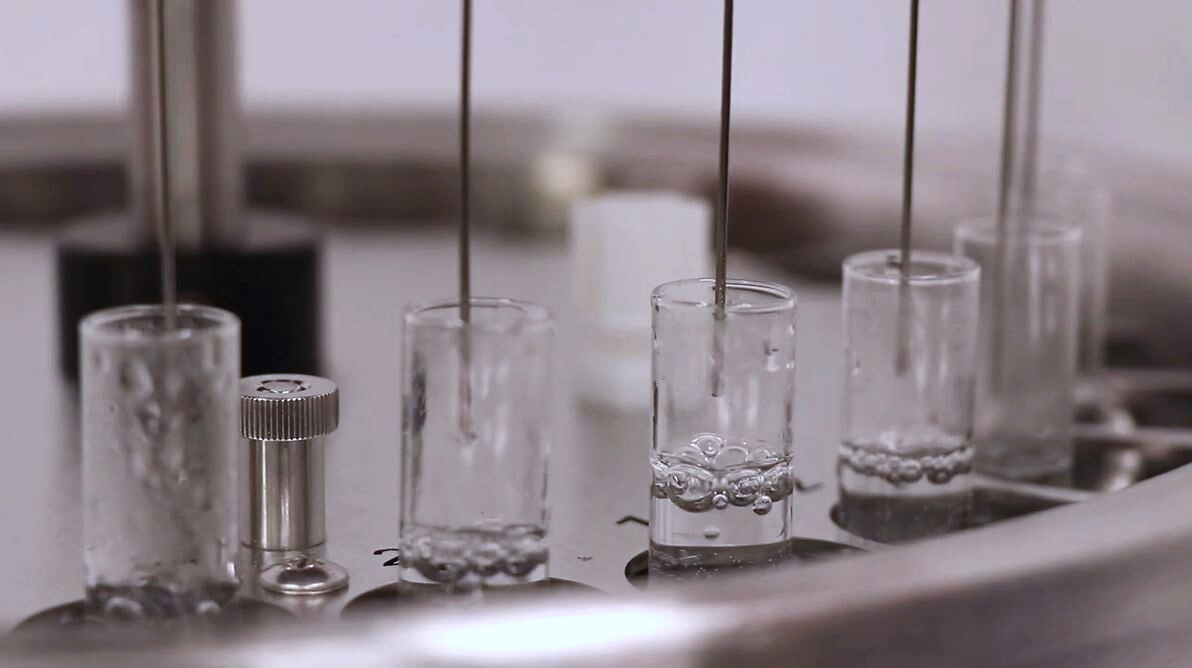
Nuclear magnetic resonance (NMR) spectroscopy is the most information-rich tool in the analytical chemist's kit for structure elucidation, but it is also one of the least sensitive. Where mass spectrometry methods can reach very low detection limits, a conventional ¹H NMR experiment typically wants milligram-scale material — though microcoil, cryoprobe, and microvolume methods have pushed that down — dissolved in a precise volume of a deuterated solvent. Between the extraction and the spectrometer sits a sample preparation step that has to concentrate fragile metabolites, swap them into a deuterated matrix, and hit an exact final volume without losing material to splashing, oxidation, or thermal breakdown. That step is nitrogen evaporation, and it is why N-EVAP nitrogen evaporators appear throughout the published NMR and metabolomics literature. This guide walks through the complete workflow: why NMR demands concentrated, deuterated samples, how nitrogen blowdown performs the concentration and solvent exchange, and the practical details — solvent choice, reference standards, tube volumes — that separate a clean spectrum from an unusable one.
Key takeaways
- NMR is relatively insensitive compared with mass spectrometry; extracts generally need to be dried and reconstituted at far higher effective concentrations than LC-MS samples.
- Most routine solution NMR samples are prepared in a deuterated solvent — the deuterium signal provides the field-frequency lock that stabilizes the spectrometer's magnetic field during acquisition.
- Solvent exchange into a deuterated solvent is achieved by evaporating the extraction solvent under gentle nitrogen, then reconstituting the dried residue in D₂O, CDCl₃, CD₃OD, DMSO-d₆, or a deuterated buffer.
- Aqueous biofluid samples typically need only 5–10% D₂O added for the lock; dried extracts are reconstituted directly in fully deuterated solvent or buffer.
- Reference standards — TMS in organic solvents, DSS or TSP in aqueous samples — are added during reconstitution to calibrate the chemical shift scale.
- Published metabolomics and NMR studies — including microcoil-NMR workflows — specify Organomation N-EVAP evaporators for the concentration and drying steps.
Why does NMR need concentrated samples?
The fundamental constraint is sensitivity. NMR detects the tiny population difference between nuclear spin states, and that difference is small, so signal scales directly with the number of nuclei in the probe. University NMR facility guidance for small-molecule ¹H NMR puts the useful range at roughly 1 to 40 mg of analyte for a routine spectrum — with optimized probes, microvolume formats, and longer acquisitions able to work with less — and a typical sample is dissolved in about 0.7 mL of solvent in a 5 mm NMR tube (MSU Max T. Rogers NMR facility). Reviews of NMR-based metabolomics make the same point from the other direction: NMR is non-destructive and highly reproducible, but its inherent sensitivity is low compared with mass spectrometric methods (Emwas et al., 2019).
The practical consequence is that an extract destined for NMR often has to be concentrated many-fold. A metabolite extract produced by methanol precipitation of plasma, or a chloroform-methanol lipid extraction of tissue, arrives at milliliters of volume and analyte concentrations far below what the spectrometer wants. A published example of the pattern comes from a metabolic profiling study of a CB2 agonist using LC-MS and microcoil-NMR: the supernatant was evaporated at 35 °C under nitrogen in an N-EVAP 111 evaporator until concentrated approximately 10-fold before further processing for microcoil-NMR identification of a novel metabolite. Concentration, not the spectrometer, is the bottleneck — and the gentler and more reproducible the concentration step, the better the spectrum.
Why deuterated solvents? The lock and the reference
Two jobs are done by the deuterated solvent that a protonated solvent cannot.
First, the lock. The deuterium resonance of the solvent is used by the spectrometer as a field-frequency lock — a continuous reference signal that lets the instrument detect and correct drift in the magnetic field during long acquisitions (Weizmann Institute NMR facility). Commonly cited facility guidance is that samples should contain at least 5–10% deuterated solvent for the lock to function — a rule of thumb that varies with spectrometer and lock setup; for aqueous biofluids it is often met simply by adding a deuterated buffer to the sample (Weizmann Institute NMR facility; Nagana Gowda & Raftery, 2019).
Second, referencing and spectral quality. Deuterated phosphate buffer is commonly added to biofluid samples before NMR acquisition because a constant pH across the sample set minimizes metabolite chemical shift variation and allows more accurate metabolite identification against library standards (systematic review of NMR-based metabolomics practices). A chemical shift reference — commonly TMS (tetramethylsilane) in organic solvents, or DSS or TSP in aqueous samples — is added during preparation to calibrate the chemical shift scale (Nagana Gowda & Raftery, 2019). Deuteration also greatly reduces the protonated solvent background, though residual solvent and water signals are never fully eliminated and must be assessed for the sample at hand: as the Emwas review notes, if only non-exchanging protons are of interest, the water suppression issue can be essentially avoided by using >99.9% deuterated solvent (D₂O instead of H₂O) (Emwas et al., 2019).
There is a third, quieter benefit. The same systematic review notes that extraction with deuterated methanol and chloroform has been shown to prevent further enzymatic activity and yield efficient metabolite recovery (systematic review of NMR-based metabolomics practices) — a quenching effect of the cold organic solvent system, which some plant metabolomics protocols exploit by performing the extraction itself in deuterated solvents such as ethanol-d₆ or methanol-d₄ (Jacob et al., 2020).
The NMR sample preparation workflow at a glance
-
Extract the sample — methanol-water for polar metabolites, chloroform-methanol (Folch-style) for lipids, or direct extraction in deuterated solvent.
-
Concentrate the extract under gentle nitrogen at controlled temperature.
-
Exchange the solvent — dry the extract, then reconstitute in the deuterated solvent or buffer chosen for the analyte.
-
Add the reference standard and adjust to the exact final volume for the NMR tube format.
-
Clarify — vortex, centrifuge or filter to remove particulates, and transfer to the NMR tube.
Step 1: Extraction
The extraction choices mirror any metabolomics or natural-products workflow. The classical Beckonert et al. protocol for metabolic profiling by NMR covers biofluid (urine, serum, plasma) and tissue preparation, including extraction of polar and lipophilic metabolites from tissues with methanol-water and chloroform-methanol systems. In the published literature that uses Organomation equipment, the same extraction families dominate: a metabolite profiling study of hepatocellular carcinoma performed Folch extraction in chloroform:methanol (2:1) and dried the organic phases under nitrogen on an N-EVAP before resuspending lipids for analysis; a metabolite profiling study of ginsenosides in zebrafish that combined UPLC-QTOF-MS with NMR listed an N-EVAP 112 nitrogen evaporator among its preparation equipment. Our sample preparation overview and lipidomics sample preparation guide cover extraction method selection in depth.
Step 2: Concentration under nitrogen
Concentration is where the N-EVAP earns its place in the NMR workflow. The requirements are specific: the extract must shrink from milliliters to a residue or a small defined volume without heat-driven degradation, with minimal exposure to oxygen, and in a format that handles dozens of small samples in parallel without the bumping risk a rotary evaporator carries for small volumes. Gentle nitrogen blowdown at a controlled water-bath temperature supports all of this when properly operated — bath temperature, gas flow, and the drying endpoint should always be validated for the analytes at hand.
Published examples span the whole concentration range. At the aggressive end, a study of hepatic ketogenesis and fatty acid partitioning dried lipid extracts completely under an N-EVAP nitrogen evaporator and resuspended them in 100 µL of chloroform/methanol (2:1); a Nature Communications metabolomics study dried 5 mL pooled metabolite extracts under nitrogen gas using an N-EVAP system and resuspended the pellet in just 20 µL of HPLC-grade water for microvolume analysis; and an ecotoxicology study of rice epicuticular waxes used nitrogen on an N-EVAP evaporator specifically to remove chloroform from wax extracts before derivatization. At the gentler end, the microcoil-NMR metabolic profiling study concentrated its supernatant only about 10-fold at 35 °C — proof that the same instrument serves partial concentration and complete drying equally well. Our articles on evaporation to dryness and solvent exchange explain the trade-offs between the two modes.
Step 3: Solvent exchange into the deuterated solvent
Solvent exchange is the heart of NMR sample preparation. The extraction solvent — methanol, acetonitrile, chloroform, ethyl acetate — is almost never the solvent the spectrometer wants, so the standard maneuver is: dry the extract completely under nitrogen, then reconstitute the dried residue in the deuterated solvent. Because the residue is dry, the deuterated solvent is not diluted by residual extraction solvent, and the solvent signal, the lock, and the chemical shift referencing all behave. For stubborn high-boiling residues, the exchange can be repeated — dry again, reconstitute again — the same repeated blowdown-and-reconstitution cycle used in residue analysis, where an extract was concentrated under nitrogen and twice exchanged to hexane in a published multi-analyte method.
Choosing the deuterated solvent follows the analyte:
- D₂O or deuterated phosphate buffer for polar metabolites and biofluids. Dried polar fractions are typically resuspended in fully deuterated buffered solution, while neat biofluids receive 5–10% D₂O or deuterated buffer for the lock (review of quantitative NMR for small biological molecules; Nagana Gowda & Raftery, 2019).
- CDCl₃ for lipids and nonpolar natural products — the most used NMR solvent, though it can be slightly acidic and acid-sensitive compounds may decompose in it (MSU Max T. Rogers NMR facility).
- CD₃OD for broad-coverage metabolomics — deuterated methanol solubilizes polar and medium-polarity metabolites (sugars, amino acids, organic acids, chlorogenic acids) while still extracting apolar lipids, which is why it is widely adopted in ¹H NMR metabolomic protocols that combine extraction efficiency with a deuterium lock signal (green coffee NMR metabolomics study).
- DMSO-d₆ for difficultly soluble analytes, and acetonitrile-d₃, acetone-d₆, or CD₂Cl₂ as alternatives (MSU Max T. Rogers NMR facility).
Two cautions carry over from facility guidance: use enough solvent that the sample is completely dissolved — undissolved particulates degrade lineshape and make locking and shimming difficult — and match the solvent volume to the tube format (MSU Max T. Rogers NMR facility).
Step 4: Reference standards and final volume
With the analyte in deuterated solvent, the final additions set up the acquisition. A reference standard — commonly DSS-d₆ or TSP for aqueous samples, TMS for organic solvents — is added during reconstitution to calibrate the chemical shift scale, and in quantitative workflows it can also serve as a concentration reference when its concentration and behavior have been validated for the sample and method; in stable-isotope-resolved metabolomics, a DSS-d₆ standard of around 0.5 mM is prepared accurately by weighing (Lane et al., 2020).
The final volume is dictated by the NMR tube, and the microvolume formats used for mass-limited samples are especially demanding of the concentration step: typical volumes are 35–55 µL for 1.7 mm tubes, 120–200 µL for 3 mm tubes, and 300–500 µL for 5 mm Shigemi tubes, against roughly 600 µL for a conventional 5 mm tube (Lane et al., 2020; MSU Max T. Rogers NMR facility). Hitting 30 µL from a 5 mL extract is a 150-fold concentration — the kind of number that makes gentle, controlled nitrogen evaporation the practical route rather than a rotary evaporator.
Step 5: Clarify and transfer
The last steps protect the lineshape. Samples should be completely dissolved by vigorous vortexing and freed of particulates by centrifugation at ≥20,000 g for 5 minutes before transfer to the NMR tube (Lane et al., 2020). After transfer, the sample is allowed 10–15 minutes in the probe to reach thermal stability before the lock and shim are carefully adjusted (Le Guennec et al., 2017). The microcoil-NMR study is the model case: concentration by N-EVAP, solvent manipulation, then a small-volume, mass-limited NMR identification that conventional tube volumes could not have supported.
Common mistakes
Bringing the extraction solvent into the NMR tube. Residual methanol or chloroform from an incompletely dried extract shows up as extra peaks, dilutes the lock signal, and shifts referencing. Dry to completeness before reconstituting in deuterated solvent.
Choosing the deuterated solvent by habit. CDCl₃ is the default for organic chemists but is wrong for polar metabolites and can be acidic toward sensitive compounds; D₂O is wrong for lipids. Match solvent to analyte solubility and stability.
Ignoring pH control in aqueous metabolomics. Without a deuterated buffer holding all samples at the same pH, metabolite chemical shifts wander between samples and library matching degrades.
Concentrating too hot. Metabolites degrade; the nitrogen blowdown bath should be set to the lowest temperature that gives practical evaporation rates, as the published N-EVAP methods at 25–40 °C illustrate.
Skipping the reference standard. Without DSS, TSP, or TMS, chemical shifts are uncalibrated and comparisons across samples or against libraries lose their anchor.
Filling the tube wrong. Too little solvent makes locking and shimming difficult; too much wastes concentrated sample. Match volume to the tube format — 35–55 µL for 1.7 mm, 120–200 µL for 3 mm, 300–500 µL for Shigemi.
FAQ
Why do NMR samples need deuterated solvents?
The deuterium signal from the solvent provides the field-frequency lock that lets the spectrometer correct magnetic field drift during acquisition; the deuterated solvent also greatly reduces the protonated solvent peak that would otherwise dominate the spectrum, and hosts the chemical shift reference standard.
What is solvent exchange in NMR sample preparation?
Solvent exchange means removing the extraction solvent — typically by gentle nitrogen evaporation to dryness — and reconstituting the dried residue in a deuterated solvent such as D₂O, CDCl₃, CD₃OD, or DMSO-d₆, so the sample reaches the spectrometer in a matrix suited to locking, referencing, and analyte solubility.
How much sample does NMR need compared with LC-MS?
Far more. Facility guidance for routine small-molecule ¹H NMR typically quotes roughly 1–40 mg of analyte (optimized probes and microvolume methods can work with less), and metabolomics reviews note NMR's sensitivity is inherently low compared with mass spectrometry — which is why concentration and drying steps are standard in NMR workflows.
Which deuterated solvent should I use for my sample?
D₂O or deuterated phosphate buffer for polar metabolites and biofluids; CDCl₃ for lipids and nonpolar natural products (with care, as it can be slightly acidic); CD₃OD for broad metabolomics coverage; DMSO-d₆ for difficultly soluble analytes.
Can I use a nitrogen evaporator instead of a rotary evaporator for NMR sample prep?
Yes, and for small, precious, or numerous samples it is often preferable: nitrogen blowdown handles many tubes in parallel at gentle, controlled temperatures with far less bumping risk than a rotary evaporator at small volumes, and published metabolomics studies specify Organomation N-EVAP evaporators for exactly these concentration and solvent-exchange steps.