
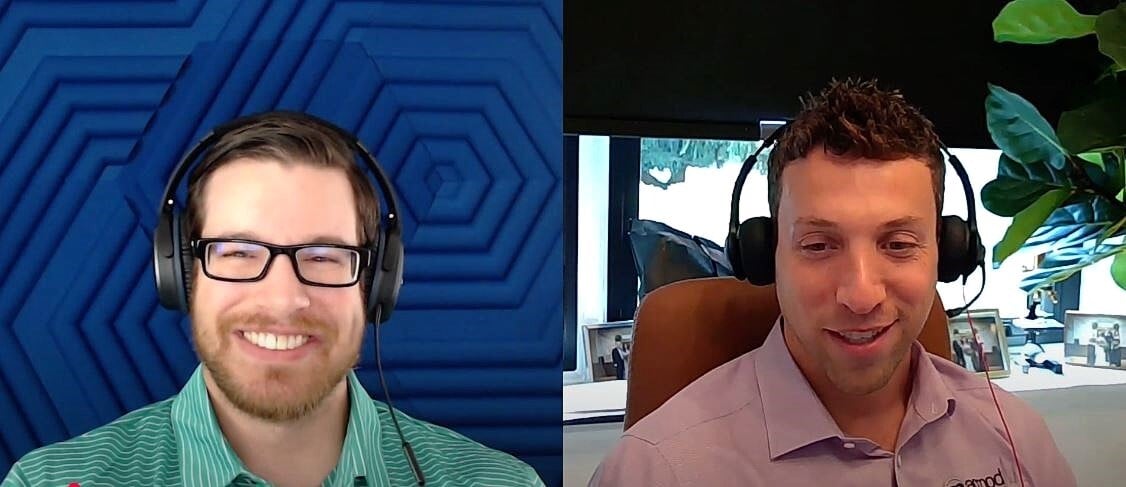
When I started the Concentrating on Chromatography interview series, I had a healthy respect for Gas Chromatography-Mass Spectrometry (GC-MS). I knew it was the "gold standard" for volatile analysis, but I viewed it largely as a mature, static technology. Fifty interviews later, my perspective has been completely blown wide open. From tracking "forever chemicals" in our drinking water to analyzing Martian mudstone for signs of life, the experts who have joined me on the show have taught me that GC-MS is as much an art as it is a science.
Reflecting on our episodes to date, here are the most unique and impactful lessons I’ve learned about the power, the pitfalls, and the future of GC-MS.
1. The Mass Spec is Only as Good as the Front End
One of my favorite conversations was with Lee Polite of Axion Labs. He gave me a reality check: while mass spectrometers are incredible at identifying total unknowns, they are essentially worthless when handed a complex mixture. You can’t just find "greasy gooey stuff" dripping out of a plant and shove it into an MS; you’ll get a spectrum of noise. The GC is the world’s best separation tool because it creates pure compounds out of those mixtures so the MS can actually do its job of weighing them. Lee’s "shopping mall" analogy—where molecules are like shoppers who linger in different stores (the stationary phase) while others move quickly through the mall (the mobile phase)—is still the best way I’ve ever heard it explained.
→ Watch on Youtube: https://www.youtube.com/watch?v=ZsCdoWSBrXM
2. The Mars "Oven" Dilemma: Indigenous Organics vs. Artifacts
My interview with Megan regarding Martian biosignatures provided a fascinating look at the high stakes of Pyrolysis GC-MS. On the Curiosity and Viking rovers, samples are heated to 1,000°C to volatilize organics for analysis. However, Martian soil is packed with oxychlorine salts. Megan taught me a critical lesson in data interpretation: When you heat organics in the presence of these salts, you can accidentally create "analytical artifacts." This raises the ultimate detective question: Did the rover detect indigenous Martian organics, or did it just see the result of a chemical reaction that happened inside the rover's own oven?
→ Watch on YouTube: https://www.youtube.com/watch?v=53BgJc8uvmE
3. Why "Fake Banana" is a Mythic Flavor Mystery
Connor’s research into banana species and flavoring was an "aha moment" for anyone who has ever eaten a piece of banana candy and wondered why it tastes so different from the fruit. Through Headspace GC-MS, Connor debunked the common myth that flavoring is modeled after an "extinct" banana. He taught me that while isoamyl acetate is the primary compound we associate with banana, the authentic flavor is actually a complex "fingerprint" of over 18 different volatile compounds. The lesson here? Quantitative ratios matter just as much as the presence of the compound itself.
→ Watch full episode: https://www.youtube.com/watch?v=lyotCCbgTXw
4. The "Glass and Metal" Bench: Fighting Invisible Contamination
I used to think that standard lab practices were sufficient for any analysis, but Megan’s work on trace organics taught me that the lab environment is a minefield of contamination. She moved her entire bench to a "glass and metal" only setup. Why? Because common plastic pipet tips and vial caps can leach siloxanes and plasticizers that ruin the baseline of a sensitive GC-MS run. Even lab detergents and soaps can be a source of noise. This was echoed by Edward Faden of MAC-MOD, who found that gas line tubing supplying a nitrogen generator could be a source of PFAS contamination.
→ Watch on YouTube: https://www.youtube.com/watch?v=53BgJc8uvmE
5. Derivatization: Making the "Un-flyable" Fly
Not everything is naturally volatile enough for a GC column. Jessica, who studied haloacetic acids (HAAs) in pool water, taught me about the "derivatization tax". HAAs are non-volatile and "sticky," forming hydrogen bonds that make them hard to vaporize. By using octanol to chemically alter the molecules, Jessica lowered their boiling point and increased their fragmentation size, making them "visible" to the GC-MS. This taught me that GC-MS isn't just for volatile gases; with the right chemistry, you can force nearly anything into the gas phase.
→ Watch full episode: https://www.youtube.com/watch?v=FPEMBNT_yWQ
6. The "Spaghetti Diagram" and the 2D Revolution
Katelynn and Haley introduced me to the mind-bending world of Comprehensive Two-Dimensional Gas Chromatography (GCxGC). For decades, researchers were intimidated by the "spaghetti diagram"—a figure showing the complex interplay of every hardware component in a 2D system. But the technology is now moving into the mainstream. Haley uses GCxGC at Chevron to characterize complex hydrocarbons that a standard 1D separation simply can’t handle. The "modulator" acts as the heart of the system, trapping packets of information from the first column and performing a secondary, lightning-fast separation. This increases peak capacity from hundreds to thousands, allowing us to see "the haystack" in a way we never could before.
→ Watch full episode: https://www.youtube.com/watch?v=O20WK7X04dw
7. Safety as an Analytical Variable
Finally, working in industry taught Haley that GC-MS isn't just about the data; it's about the business of safety. In grad school, if an instrument breaks, you fix it later. In a service lab at a major energy company, a broken instrument means downtime that costs thousands of dollars. Learning to handle pressurized gases and flammable solvents while maintaining 24/7 uptime is a skill set that goes far beyond what is taught in an undergraduate chemistry lab.
Conclusion: The Foundation of Every Peak
If there is one thing these 50 episodes have reinforced, it is that the final chromatogram is only as reliable as the sample preparation that preceded it. Whether you are using a 3D-printed reaction vessel, stacking syringe filters to prevent back-pressure, or meticulously drying down samples to avoid "crashing out" in your lines, the preparation stage is where the battle for high-quality data is won or lost.
At Organomation, we have spent over six decades building the tools that support these exact breakthroughs. Our founder, Dr. Neal McNiven, was a PhD chemist who understood that the manual dry-down of samples was the ultimate bottleneck in the chromatography workflow.
Today, our N-EVAP nitrogen blowdown evaporators remain the most cited model in U.S. EPA methods because they offer the precise, gentle control needed for sensitive environmental and clinical samples. Whether you are analyzing PCBs in river water, concentrating coffee volatiles, or preparing samples for the next generation of forensics, Organomation offers high-quality, American-made equipment designed to accelerate your research.
Don't let your GC-MS become a "black box" that produces noisy data. Start with a solid foundation. Visit Organomation.com to explore our range of parallel evaporators and solvent extractors, and let us help you turn your complex mixtures into clear, actionable answers.