
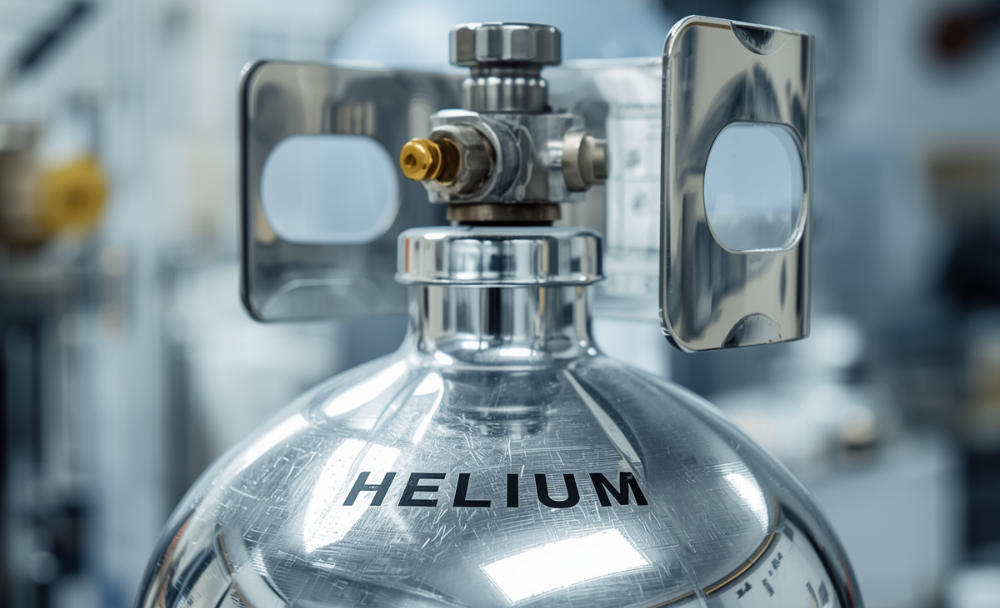
TL;DR: Helium prices have roughly doubled since the Iran conflict began in early 2026, with global supply from Qatar — responsible for approximately one-third of world production — severely disrupted. For laboratories running gas chromatography and other helium-dependent instruments, the financial and operational impact is impossible to ignore.
Part 1: The Helium Price Crisis — What Happened and Why It Matters to Your Lab
A Perfect Storm in the Helium Market
Helium has never been a cheap commodity, but what laboratories are facing in 2026 represents a genuine inflection point. The combination of escalating Middle East conflict, Strait of Hormuz shipping disruptions, and structural supply constraints has created the most severe helium pricing environment in recent memory — one that shows no sign of rapid reversal.
To understand why laboratory budgets are under pressure, it helps to understand where helium actually comes from. Unlike most industrial gases, helium cannot be manufactured. It is a byproduct of radioactive decay deep within the Earth's crust, and it must be captured from natural gas deposits before it escapes into the atmosphere. The practical result is that the entire world's commercial helium supply flows from a small number of producing regions — most critically, the United States and Qatar.
Qatar: The World's Helium Chokepoint
Qatar is responsible for approximately one-third of global helium production, channeled through QatarEnergy LNG's massive purification facility at Ras Laffan Industrial City, which draws from the North Field — the world's largest non-associated natural gas reservoir. When this facility operates normally, it is the single largest stabilizing force in the global helium market. When it is disrupted, the entire world feels it.
In early 2026, it stopped operating normally. Iranian missile strikes damaged key industrial infrastructure in Qatar, and the resulting disruption to Ras Laffan created an immediate supply shock. Compounding the damage, the Strait of Hormuz — the critical shipping corridor through which Qatari LNG and helium exports must pass — became subject to elevated war-risk premiums and logistical disruptions that pushed shipping costs sharply higher.
Beyond Price: The Supply Reliability Problem
For laboratory managers, the helium crisis is not merely a budget problem — it is an operational continuity problem. A laboratory that cannot obtain helium cannot run its gas chromatography (GC) instruments, cannot perform MRI maintenance or calibration, and cannot complete analytical work that clients and researchers depend upon.
Supply allocation tightening, spot market shortages, and delays at ports serving Middle Eastern shipping lanes have created a new reality: even laboratories with long-term supply contracts have experienced delivery disruptions. The gas that was once ordered and reliably delivered within a predictable lead time now arrives subject to geopolitical delays entirely outside the laboratory's control.
This represents a fundamental shift in risk exposure for laboratory operations. Helium's value to a laboratory was always its combination of technical performance and reliable availability. The second pillar of that value proposition has been significantly eroded.
Who Is Most Affected in the Laboratory Setting?
While the helium price surge affects any organization that uses the gas, laboratories face a particularly acute version of the problem for several reasons:
- GC carrier gas consumption: Gas chromatography is one of the largest industrial uses of high-purity helium. Analytical laboratories running continuous GC workflows — environmental testing, pharmaceutical QC, food safety, petrochemical analysis — consume helium at a high, predictable rate. When the price of that gas doubles, it represents a direct and substantial increase in the variable cost of every single analytical run.
- No short-term substitution: Unlike some industrial uses where helium can be temporarily swapped for another gas, GC methods are validated for specific carrier gases. Switching requires revalidation — a time-consuming, resource-intensive process that cannot be completed in response to an acute supply disruption.
- Contractual and regulatory obligations: Laboratories operating under accreditation, client contracts, or regulatory frameworks face potential non-compliance consequences if supply disruptions prevent them from completing required analyses. The cost of a helium shortage extends far beyond the gas itself.
Part 2: The Strategic Case for Switching to Hydrogen — and Installing a Generator
Hydrogen as a Carrier Gas: The Science Is Already Settled
The argument for hydrogen as a GC carrier gas is not new, and it is not driven solely by economics. For many applications, hydrogen is technically superior to helium. Its higher diffusivity in the column results in faster analyte movement, enabling shorter run times and higher throughput without loss of resolution. The van Deemter curve for hydrogen is flatter over a wider range of flow rates, giving analysts more operating flexibility.
The US EPA, the European pharmacopoeias, and numerous international standards bodies have long recognized hydrogen as an acceptable — and in some cases preferred — carrier gas for GC methods. Chromatography column and instrument manufacturers including Agilent, Shimadzu, PerkinElmer, and Thermo Fisher have published detailed application notes and validated methods for hydrogen carrier gas, often demonstrating equivalent or improved performance relative to helium.
In short: switching from helium to hydrogen for GC is not an experimental or unproven step. It is a well-established, widely validated practice that thousands of laboratories around the world have already completed. The current pricing environment simply makes the decision more urgent — and the financial case more compelling — than it has ever been before.
Why Cylinders Are Not the Answer
It might be tempting to view the hydrogen transition simply as swapping one gas cylinder supplier for another. This approach misunderstands both the nature of the problem and the opportunity. Hydrogen delivered in cylinders carries its own logistical challenges: cylinder handling and storage requirements, regular delivery schedules, the same kind of supply chain dependencies that have proven so costly with helium, and — critically — safety considerations around the storage of high-pressure hydrogen in laboratory spaces.
The correct solution, adopted by the most forward-thinking laboratory managers, is to install an on-site hydrogen generator. This single decision transforms the laboratory's gas supply from a variable, externally-dependent cost into a stable, internally-controlled utility — analogous to the difference between buying bottled water and installing a purified water system.
The Hydrogen Generator Advantage: Six Reasons to Make the Switch
1. Complete Supply Independence
A hydrogen generator produces gas on demand from deionized water using electrolysis. There is no supply chain to be disrupted by conflict in the Middle East. There is no shipping container to be delayed at a port. There is no cylinder to run out mid-run. The laboratory's hydrogen supply is as reliable as its electricity supply — and in most facilities, that is extremely reliable.
For laboratory managers who have spent the past year managing helium allocation anxiety, explaining supply disruptions to clients, and rescheduling analytical work around delivery delays, this represents a profound operational upgrade.
2. Long-Term Cost Predictability and Savings
Hydrogen generators produce gas at a cost primarily determined by electricity consumption. Electricity prices, while subject to some variation, are dramatically more stable than helium spot markets and are not subject to geopolitical disruptions of the kind that have driven helium prices to double in a matter of months.
The total cost of ownership analysis for hydrogen generation versus helium cylinder purchase — factoring in current helium pricing, cylinder rental fees, delivery charges, and handling costs — now firmly favors hydrogen generation for any laboratory running one or more GC instruments full-time. With helium prices having doubled since the onset of the Iran conflict, the payback period for a generator investment has shortened significantly.
3. Superior Gas Purity and Consistency
Modern hydrogen generators produce gas at purities of 99.9999% or higher — exceeding the purity specifications required for the most demanding analytical GC applications. Critically, this purity is consistent from the first milliliter of gas produced to the last. There is no batch-to-batch variation, no risk of receiving a cylinder with a contamination issue, and no requirement to test incoming gas quality.
For laboratories operating under strict quality systems — ISO 17025, GMP, EPA method compliance — the shift to a generator can actually improve data quality and simplify the supplier qualification burden associated with managing a rotating roster of gas cylinder suppliers.
4. Improved Laboratory Safety Profile
Hydrogen requires appropriate safety management — adequate ventilation, hydrogen-compatible fittings, and basic leak detection protocols. These requirements are straightforward and well-understood, and are entirely manageable in a standard analytical laboratory environment. Modern hydrogen generators include integrated safety systems including automatic shutdown on leak detection, pressure limiting, and fail-safe electronics.
What is often overlooked is that a hydrogen generator improves overall laboratory safety relative to the cylinder-based alternative by eliminating the need to store and handle high-pressure compressed gas cylinders. The generator contains only a small volume of hydrogen at any given time — far less than a standard gas cylinder — and delivers it directly to the instrument through short, fixed lines.
5. Environmental and Sustainability Benefits
Helium extraction is an energy-intensive industrial process. The gas must be separated from natural gas streams, compressed, liquefied, and transported globally — often by sea freight from Qatar or the United States. Each step in that chain carries an environmental cost.
Hydrogen generation from water electrolysis has a fundamentally different environmental profile, particularly for laboratories that operate in facilities with access to renewable electricity. As laboratory sustainability programs become an increasing priority — driven by institutional ESG commitments, client expectations, and regulatory trends — the ability to point to an on-site, low-carbon gas supply is a meaningful differentiator.
6. Future-Proofing Against Ongoing Helium Market Instability
The current price spike is not an anomaly that will self-correct quickly. The structural conditions driving helium price increases — concentrated supply in geopolitically exposed regions, growing demand from semiconductor manufacturing and MRI imaging, the irreversibility of atmospheric helium loss once released — are not going away. New supply projects in South Africa, Canada, and elsewhere will add capacity over the medium term,but forecasters broadly expect helium pricing to remain elevated relative to historical norms.
A laboratory that installs a hydrogen generator today is not just solving the 2026 problem. It is making a strategic decision that positions the organization to be independent of whatever the next helium supply shock looks like.
At a Glance: Helium Cylinder vs. On-Site Hydrogen Generation
|
Factor |
Helium (Cylinder) |
Hydrogen (Generator) |
Advantage |
|
Ongoing Cost |
High & rising (2× since 2025) |
Low fixed electricity cost |
Hydrogen ✓ |
|
Supply Reliability |
Vulnerable to geopolitics |
On-demand, in-house |
Hydrogen ✓ |
|
Purity Control |
Batch variability |
Consistent >99.9999% |
Hydrogen ✓ |
|
Safety (GC use) |
Inert, non-flammable |
Requires lab protocols |
Helium |
|
Carrier Gas Performance |
Excellent |
Comparable or better |
Comparable |
|
Long-term Cost Trend |
Upward |
Stable |
Hydrogen ✓ |
|
Carbon Footprint |
Energy-intensive extraction |
Lower with renewables |
Hydrogen ✓ |
How Organomation Supports Your Transition to Hydrogen
At Organomation, we have been supporting analytical laboratories with precision gas handling and concentration equipment for over six decades. We understand that the decision to transition carrier gases is not made lightly — it involves instrument requalification, method validation, staff training, and procurement changes that require planning and support.
Our team, in combination with Claind srl, can assist laboratories at every stage of the hydrogen transition: from initial feasibility assessment and instrument compatibility review, through gas flow optimization and generator sizing, to ongoing technical support after installation. We work with the leading hydrogen generator manufacturers and can help you specify the right system for your instrument fleet and throughput requirements.
The current helium pricing environment has created a narrow window in which laboratories that act decisively will establish a structural cost and reliability advantage over those that continue to absorb rising helium costs. We invite you to start that conversation with us today.
Contact the Organomation team to schedule a complimentary laboratory gas assessment and begin your transition to on-site hydrogen generation. Visit organomation.com or call us to speak with an applications specialist.
The Moment to Act Is Now
The helium crisis of 2026 is not a temporary inconvenience — it is a structural realignment of the global gas supply market, accelerated by a geopolitical conflict whose resolution timeline remains uncertain. Laboratories that approach this as a passing disruption to be absorbed through budget adjustments are likely to find themselves absorbing those costs indefinitely.
The case for switching to hydrogen carrier gas and installing an on-site hydrogen generator has never been more compelling. The technology is proven, the performance is validated, the safety is manageable, and the economics — already favorable before the current price surge — are now overwhelmingly advantageous.
The laboratories that will emerge from this crisis in the strongest position are those that use it as the catalyst to make a change they should have made years ago. The question is no longer whether to make the switch — it is how quickly you can do it.