
When Organomation surveyed a wide spectrum of laboratory professionals including those from academic institutions and environmental testing facilities, cost emerged as expected—the top concern for how labs source and manage nitrogen. But a closer look at the data revealed something equally disruptive: operational and workflow disruptions rank as the third most significant challenge laboratories face.
These aren't abstract frustrations. They're the real, day-to-day complications that compromise research productivity and regulatory compliance in ways that spreadsheet budgets rarely capture.
The Hidden Tax on Research Time
Nitrogen supply management doesn't simply cost money—it consumes time. Specifically, it consumes the time of scientists, lab managers, and researchers who should be focused on their core work.
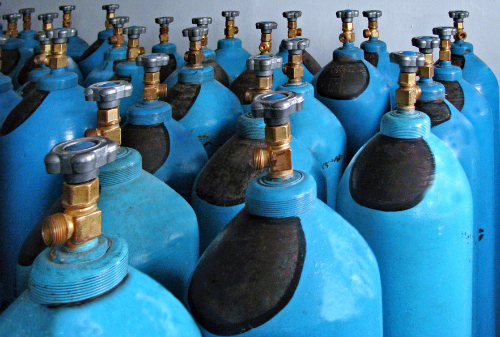
Consider the academic research laboratory. When a principal investigator or graduate student becomes responsible for coordinating nitrogen deliveries, tracking cylinder inventory, and navigating university procurement systems, their research productivity declines immediately. As Lisa Jones, a former manager at the University of Alabama, observed on the Concentrating on Chromatography podcast, the material management challenge adds another layer of friction. Compressed gas cylinders must physically move between buildings, requiring material handling equipment and careful tracking to ensure cylinders don't become lost in inventory systems. Jones described the reality: "Cylinders would go on these fabulously smooth sidewalks from one building to another," creating a constant inventory reconciliation problem where cylinders end up counted toward the wrong departments.
For environmental testing laboratories, the operational burden takes a different form—but it's equally consequential. These labs process 50-200 samples daily under strict EPA regulatory requirements, with many samples requiring 24-48 hour turnaround times. When a nitrogen cylinder runs empty or a delivery is delayed, the entire workflow halts. Samples waiting for concentration cannot proceed to analysis. Client deadlines slip. Regulatory compliance becomes compromised.
Where the Workflow Breaks Down
According to Organomation's 2025 survey, operational and workflow issues appeared in the top three concerns for 39 laboratories. The specific frustrations vary by supply method:
For labs using liquid dewars: Operational workflow issues rank second among all frustrations. Managing heavy, cold containers creates safety and logistical challenges that demand constant attention and specialized handling.
For labs receiving bulk nitrogen deliveries: Workflow concerns rank equally high, reflecting the complexity of coordinating large-scale deliveries and managing the infrastructure required to receive and store bulk supply.
Even for labs with on-site nitrogen generation: Operational issues still rank third, suggesting that equipment maintenance and monitoring create their own set of demands.
The common thread: nitrogen management—regardless of the supply method—requires active, ongoing oversight that distracts from the actual work laboratories need to accomplish.
What This Looks Like in Practice
Academic Research Institutions
University procurement isn't simply bureaucratic—it's genuinely complex. Equipment purchases require approvals from multiple departments, compliance with state contract rules, integration with grant timelines, and coordination across institutional systems. When nitrogen supply falls into this machinery, what should be a routine replenishment becomes a weeks-long administrative exercise.
For labs with variable, research-driven sample types and smaller batch sizes (typically 5-20 samples per session), this procurement friction compounds across dozens of purchasing cycles throughout the year. Scientists find themselves managing supply chains rather than conducting research.
Additionally, the physical management of cylinders creates unexpected overhead. Tracking where cylinders actually reside, ensuring proper rotation, managing certifications and expiration dates—these tasks demand time and attention that academic budgets rarely account for.
Environmental Testing Laboratories
Environmental labs face a different operational reality. Processing 50-200 samples daily for compliance testing (EPA methods 537, 533, 1633, and others) leaves no margin for supply disruptions. These labs run on tight timelines: samples arrive, get processed through sample preparation, and move immediately to analytical instruments. Any interruption in nitrogen availability cascades into delayed results, which can mean missed client deadlines and regulatory defensibility questions.
The operational burden here isn't primarily administrative—it's continuity. These labs need nitrogen to be reliably available in the quantity they need, exactly when they need it, without worrying about whether today's delivery arrived on schedule or tomorrow's cylinder might be empty during a critical batch run.
The Real Cost of Operational Complexity
Organomation's survey data shows that laboratories spend approximately $851.85 monthly on nitrogen at an average cost of $2.27 per liter. However, this figure captures only the direct supply cost. The hidden operational costs include:
- Time spent coordinating delivery schedules and receiving shipments
- Labor hours managing inventory rotation and tracking
- Administrative effort to verify certifications and compliance documentation
- Productivity loss when scientists handle purchasing instead of conducting experiments
- Risk costs when supply disruptions delay critical analyses
For environmental testing labs, this operational burden directly impacts the bottom line: a two-hour nitrogen supply interruption can delay dozens of client samples, creating cascading project delays and client service impacts.
A Different Approach to Nitrogen Supply
The survey reveals a compelling alternative: laboratories using lab-scale nitrogen generators report dramatically lower costs—$0.70 per liter, compared to $2.79 per liter for gas cylinders and $2.06 per liter for liquid dewars. That's a 75% cost reduction compared to cylinders.
But the financial benefit tells only part of the story. On-demand nitrogen generation fundamentally transforms operational workflows by eliminating the logistics burden entirely.
Lisa Jones, reflecting on her experience with on-site generation, captured this shift: "This to me is the picture of serenity and peace... ask for it in your startup package, do whatever you got to do".
When nitrogen is generated on-site and on-demand:
- Material handling equipment becomes unnecessary—no more cylinder transport between buildings
- Inventory reconciliation disappears—cylinders don't get lost or miscounted
- Procurement cycles vanish—nitrogen is simply available when needed
- Supply continuity is assured—workflow interruptions from empty cylinders or delayed deliveries evaporate
- Scientists return to their work—laboratory staff focus on research and analysis, not supply management
For academic labs, this means researchers reclaim time lost to administrative overhead. For environmental testing facilities, this means continuous workflow without the risk of regulatory compliance interruptions.
Choosing the Right Path Forward
As laboratories look ahead to the next three years, 96% anticipate their nitrogen needs will either increase or remain steady. This growth trajectory makes the operational burden of traditional nitrogen supply increasingly untenable. Labs that continue managing cylinders, coordinating deliveries, and navigating procurement complexity will find these tasks consuming growing portions of their operational budgets and staff time.
The alternative is to address nitrogen supply as a solved problem rather than an ongoing operational challenge. On-site generation removes nitrogen management from the list of tasks competing for laboratory attention. It is simply available—consistently, reliably, at the exact volumes and flow rates your work requires.
For academic institutions wrestling with procurement complexity and cylinder logistics, for environmental testing labs demanding supply continuity, and for any laboratory where operational simplicity translates directly to research productivity, the case for on-demand nitrogen generation extends far beyond cost per liter.
The real value lies in reclaiming the time, attention, and operational focus that traditional nitrogen supply steals from your laboratory's core mission.
Take Back Control of Your Lab's Operations
The operational simplicity of on-site nitrogen generation isn't just a nice-to-have—it's a path to reclaiming the focus and productivity your research demands. Rather than managing cylinders, coordinating deliveries, or navigating procurement complexity, your team can concentrate on what matters: the work itself.
Organomation's nitrogen generators are purpose-built to work seamlessly into academic research workflows and environmental testing operations alike. They deliver consistent, reliable nitrogen whenever your lab needs it—without the logistics, without the inventory headaches, and without the cost burden of traditional supply methods.
Curious about what this could mean for your specific situation? Start with our Nitrogen Generator Savings Calculator—it translates your current nitrogen consumption into real dollar savings. Or if you'd prefer to discuss how on-site generation fits your workflow and regulatory requirements, our team is ready to help. Reach out to speak with someone who understands the operational realities your lab faces.