
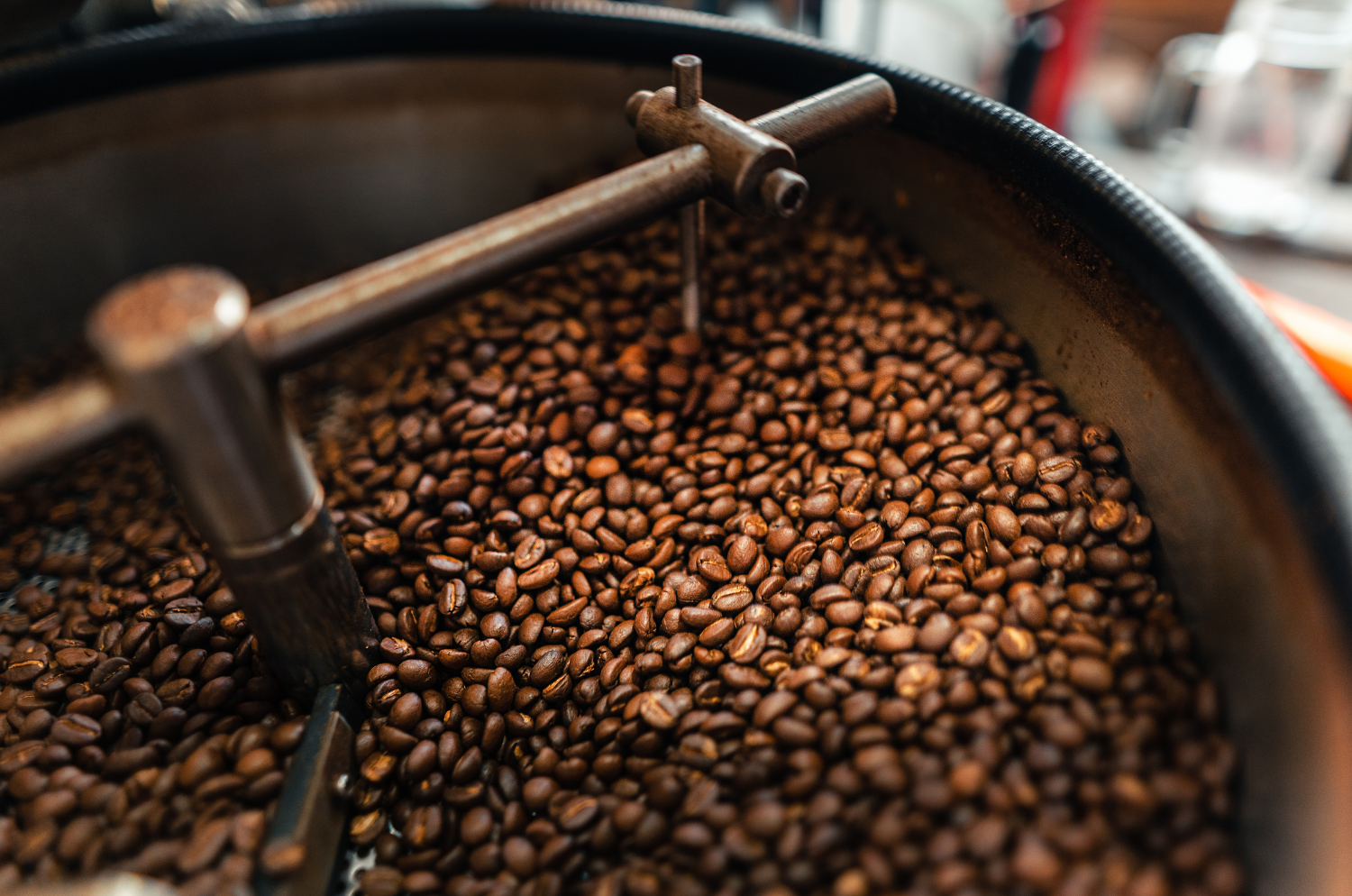
Claind's article on nitrogen generators for coffee roasters lays out a compelling case: on-site nitrogen generation displaces oxygen during roasting, cooling, and packaging, protecting delicate coffee oils from oxidation, reducing staling, and cutting the cost and hassle of cylinder deliveries. That case study is a useful entry point into a much broader story. The same core mechanism — using an inert, oxygen-free atmosphere to prevent unwanted chemical reactions — turns out to be foundational across food processing, industrial safety, electronics manufacturing, additive manufacturing, and even automotive maintenance. Once the fundamental chemistry is understood, the "non-traditional" label starts to look more like "underappreciated."
The CommonThread: Oxygen Is The Enemy
Nitrogen makes up roughly 78 percent of ambient air and is prized industrially because it is inert relative to organic molecules, metals, and rubber under most process conditions. Oxygen, by contrast, is the driver behind oxidative rancidity in fats and oils, corrosion in metals, combustion in flammable vapors, and the disorder caused by aging tire rubber. Nitrogen generation systems — typically pressure swing adsorption (PSA) or membrane-based units — pull nitrogen directly from compressed air on-site, eliminating the oxygen-driven reactions without introducing any new chemical hazard. That single principle explains why nitrogen shows up in contexts as different as a coffee roastery and a fire-sprinkler system.
Food and Beverage Processing Beyond Coffee
Coffee is just one branch of a much larger food-preservation application. Modified Atmosphere Packaging (MAP) is the dominant non-coffee use case in the food sector: nitrogen displaces oxygen inside bags of chips, nuts, bakery items, and prepared meals, slowing oxidative rancidity and microbial growth while also cushioning fragile products against physical damage during shipping. Snack manufacturers in particular rely on nitrogen flushing to keep fried and fatty products from developing off-flavors on the shelf.
Beverage producers use nitrogen for tank blanketing in breweries and wineries, protecting beer and wine from oxidation between fermentation and bottling, and for purging bottles and cans immediately before filling to strip out residual oxygen. Nitro beers and stouts also use nitrogen injection at the point of dispense to create their characteristically fine, creamy bubble structure — a direct beverage-quality application distinct from preservation.
Bulk edible-oil refiners and animal-feed producers apply the same blanketing and sparging techniques to fat-rich products, which are especially prone to rancidity during storage and transport. Controlled Atmosphere (CA) storage takes this further for produce: apples, pears, and other fruit are stored in nitrogen-rich, low-oxygen rooms that dramatically slow ripening and senescence, extending shelf life from weeks to months. Grain and cereal storage facilities use a related tactic — flooding silos with nitrogen to create an anoxic environment that kills insect larvae and prevents infestation without chemical fumigants.
|
Food & Beverage Application |
Mechanism |
Primary Benefit |
|
Modified atmosphere packaging |
Oxygen displacement in sealed packaging |
Extended shelf life, texture retention |
|
Tank and vessel blanketing |
Inert gas layer over liquid surface |
Prevents oxidation of beer, wine, oils |
|
Controlled atmosphere storage |
Low-oxygen storage environment |
Slows ripening of fresh produce |
|
Grain fumigation |
Anoxic storage environment |
Insect control without chemicals |
Industrial Safety: Explosion and Fire Prevention
One of the most consequential non-traditional applications of nitrogen generation is explosion and fire prevention, and it is also where the industrial story loops back directly into the analytical laboratory. In oil, gas, and coal operations, nitrogen is injected into fuel tank ullage space, pipelines, and mine void areas specifically to reduce oxygen concentration below the threshold required to sustain combustion — a technique known as inerting. Dry-pipe and pre-action fire sprinkler systems use dedicated nitrogen generators for a related but distinct purpose: filling the piping network with nitrogen instead of compressed air prevents the internal corrosion that leads to microbial-influenced corrosion (MIC) and premature pipe failure, which is a leading cause of sprinkler system malfunction.
This same inerting logic governs how flammable solvents are handled safely on a much smaller scale — inside the laboratory. Organomation's own guidance on evaporating explosive solvents describes exactly this principle in miniature: a positive-pressure purge device, or Z-Purge, maintains a continuous flow of inert nitrogen gas within the heating enclosure of a nitrogen blowdown evaporator, creating a pressure gradient that prevents flammable solvent vapors such as hexane, diethyl ether, or carbon disulfide from entering the heating unit and igniting. The evaporator is continuously purged throughout the entire concentration process to flush out any stray vapor, offering an affordable alternative to fully explosion-proof or intrinsically safe equipment. In other words, the same inerting strategy that protects a coal mine or an oil pipeline at industrial scale is doing the identical job — displacing oxygen to eliminate an ignition pathway — inside a bench-top nitrogen evaporator handling milliliters of flammable solvent. Explosion prevention via nitrogen inerting is not a separate discipline from laboratory solvent evaporation; it is the same chemistry applied across radically different scales.
Electronics Manufacturing and Metal Fabrication
Nitrogen generation plays an equally important but less visible role in electronics assembly. Wave and reflow soldering processes use an inert nitrogen atmosphere to suppress solder oxidation, reduce dross formation, and produce cleaner, more consistent solder joints — a quality improvement that has become standard practice in high-reliability electronics manufacturing. In metal fabrication, nitrogen serves as the assist gas in fiber laser cutting systems, where it prevents oxidation of the cut edge on stainless steel and aluminum, enabling faster cutting speeds and eliminating the discoloration that occurs when oxygen is used as the assist gas instead.
Additive Manufacturing: A Fast-Growing Frontier
Nitrogen generation has become integral to modern 3D printing, particularly for Selective Laser Sintering (SLS) and Selective Laser Melting (SLM) systems. These printers purge the build chamber with nitrogen to protect polymer or metal powders from oxidation during the printing process, which directly improves surface finish, dimensional accuracy, and the mechanical strength of the finished part. Nitrogen is also used during the controlled post-print cooling phase for metal parts, preventing surface discoloration and oxidation before parts move on to post-processing. As industrial and desktop additive manufacturing adoption accelerates, on-site nitrogen generation is increasingly preferred over gas cylinders because it delivers a continuous, cost-predictable supply without the logistics of cylinder exchange.
Automotive and Tire Applications
Nitrogen tire inflation is a widely commercialized application built on straightforward molecular physics: nitrogen molecules are larger than oxygen molecules and diffuse through tire rubber more slowly, which helps tires retain pressure longer, run cooler under load, and resist the internal oxidation that degrades rubber compounds and corrodes wheel rims over time. This benefit applies across passenger vehicles, commercial fleets, aircraft, and heavy mining equipment, and dedicated nitrogen-generator-fed inflation stations are now common fixtures at tire service centers and vehicle maintenance facilities.
Why This Matters Beyond the Individual Use Case
Coffee roasting, food packaging, fire suppression, electronics assembly, additive manufacturing, and tire care appear unrelated on the surface, but each application exploits the same basic property: nitrogen's chemical inertness relative to oxygen-driven degradation, corrosion, and combustion. The Claind coffee article demonstrates this principle at the scale of a single roastery, showing measurable cost savings and product-quality benefits from replacing cylinder or liquid nitrogen with on-site generation. Organomation's explosive-solvent safety guidance demonstrates the identical principle operating at bench scale, where a Z-Purge device uses continuous nitrogen flow to eliminate an ignition pathway during solvent evaporation. Recognizing nitrogen generation as a unifying technology — rather than a series of disconnected, industry-specific solutions — clarifies why on-site generation continues to displace bottled and liquid nitrogen supply chains across such a wide range of applications, from a coffee roastery's oxidation control to a laboratory's explosion prevention protocol.